9.29.2006

Fight the dictatorship

It's finally happened after 217 years. The Congress has voted to give the president dictatorial powers. Under the antiterrorism legislation passed yesterday, Bushius Caesar now has the right to arrest anyone and hold them indefinitely, without charges or a trial or letting them see evidence against them or chance for appeal -- and to torture them, simply by calling them "illegal enemy combatants." If that's not the definition of a dictator, what is? Is that not Stalin, Hitler, Mussolini? We now have a legal framework for gulags for dissenters. Game, for the time being, over. Any of our lawyers care to comment on this? How scary is this?

There is a diary on this by a lawyer at DailyKOS. Here's a summary from the NYT:

Enemy Combatants: A dangerously broad definition of “illegal enemy combatant” in the bill could subject legal residents of the United States, as well as foreign citizens living in their own countries, to summary arrest and indefinite detention with no hope of appeal. The president could give the power to apply this label to anyone he wanted.

The Geneva Conventions: The bill would repudiate a half-century of international precedent by allowing Mr. Bush to decide on his own what abusive interrogation methods he considered permissible. And his decision could stay secret — there’s no requirement that this list be published.

Habeas Corpus: Detainees in U.S. military prisons would lose the basic right to challenge their imprisonment. These cases do not clog the courts, nor coddle terrorists. They simply give wrongly imprisoned people a chance to prove their innocence.

Judicial Review: The courts would have no power to review any aspect of this new system, except verdicts by military tribunals. The bill would limit appeals and bar legal actions based on the Geneva Conventions, directly or indirectly. All Mr. Bush would have to do to lock anyone up forever is to declare him an illegal combatant and not have a trial.

Coerced Evidence: Coerced evidence would be permissible if a judge considered it reliable — already a contradiction in terms — and relevant. Coercion is defined in a way that exempts anything done before the passage of the 2005 Detainee Treatment Act, and anything else Mr. Bush chooses.

Secret Evidence: American standards of justice prohibit evidence and testimony that is kept secret from the defendant, whether the accused is a corporate executive or a mass murderer. But the bill as redrafted by Mr. Cheney seems to weaken protections against such evidence.

Offenses: The definition of torture is unacceptably narrow, a virtual reprise of the deeply cynical memos the administration produced after 9/11. Rape and sexual assault are defined in a retrograde way that covers only forced or coerced activity, and not other forms of nonconsensual sex. The bill would effectively eliminate the idea of rape as torture.

Step One has to be taking the Congress away from these disgusting traitors. Now is the time to give money if you ever thought about doing that, as tomorrow is the deadline for this Quarter.

Contribute to DNC to help win the mid-term election and change course.
Volunteer to call voters to convince people to turn away from disaster.
Join/give to the ACLU because they will have to fight this unconsitutional law in the courts.

Daddi Bauht Stone!!!


Peezze Save Georgie! Peeze!

-Pogue

9.28.2006

Daddy baut a coughin


Daddy has only hurd from 4 peeps -- he polisses his boomstick -- and he got a coughin for Georgie! Oh peez save my bro! Peez gyve to awkshun.

-Pogue

9.27.2006

Smart bacteria, evil yogurt, and the end of security

Every once in a while, the Internets lead you to some nugget of what-the-bloody-hell... Ian Pearson is a futurologist for British Telecom, and here is a snippet -- okay, a long stretch -- from an interview he did last week with a Welsh technology news site I just stumbled across (sweet dreams!):

There's another one - the security threat from hell. Think of the Terminator movies. The technology of that is pretty much obsolete by the time we get to 2020, a prototype of the T-2 liquid metal robot has already been done, and with nanotechnology is will be possible to make that work. That's not the problem to worry about.

DNA is already being used in a test tube to assemble macro electronic circuits - basically shove in a suspension of carbon nano tubes and gold particles, stir in some DNA. You can persuade the DNA to assemble the gold particles onto the end of the carbon nano tubes and make simple circuits. That was demonstrated about two years ago, and the company has gone secret since, as they are now working on developing more sophisticated circuits. The idea is that you do bottom up assembly which is the next generation of chip assembly by using DNA and protein clusters to basically grab the stuff and stick it together using clever chemistry. The key point is that you can do this with DNA.

We were thinking, one of the good ways of doing this is spending billions of pounds for a real live bacterium - e-coli, or something you find in yoghurt - and you don't modify it so much that it can't survive because you want it to replicate, but you modify it so that it creates electronic circuits within its' own cells. That's really good fun then, because you've got electronic bacteria - real live bacterium which can replicate with electronics in it. The electronics have nothing to do with the bacteria, they are just there, but they turn it into "smart bacteria", because you can then connect those electronics together using infrared or bioluminescence and make completely scalable electronic circuits. So you start off with one bacterium, which is essentially a module, and you link billions of these together and you've got something that makes your PC look pretty primitive. You've got a "smart yoghurt" by about 2025, and we did the calculations, and we reckon that it's possible to make a yoghurt with roughly the same processing power as the entire European population.

It gets worse. If it's yoghurt, you can just bung it in the bin, but unfortunately yoghurt is just the bacterial suspension. Bacteria is all around us, in everything we touch, everywhere you look around your office. There's also bacteria in your body - in fact more bacterial cells than human cells - and an awful lot of diseases can change your psychological behaviour.

Keeping the Terminator theme, the T-4 robot is totally invisible - it's based on bacteria - you breathe them in via the air supply and they directly change what you want to do. You can't fight against that. In the War of the Worlds, there were all these sophisticated space ships that got destroyed by the germs in the end - that could be the future for humanity. In all seriousness, one of the biggest threats we face this century is probably smart bacteria, and as a security risk it's enormous.

At the moment we're relying on encryption and firewalls and other security measures to stop people stealing your passwords. In the future, all I have to do is let some bacteria into your building; they float through the air conditioning system, land on your keyboard, you can't see them, you don't know they are there. They record every single keystroke and report it back to me. As if that's not enough, they could also be listening to what you're talking about, and even directly interface with your brain if necessary, and they can certainly float in through the vents on your PC and access the chips.

So how do you manage security in that sort of a world? I would say that there will not be any security from 2025 onwards, because I do not see how you could possibly do it. You just can't get rid of the bacteria - you could use bacterial filters in the air supply, but you can't afford to do that for every single bit of air everywhere in the entire country. We don't even have the beginnings of understanding how to deal with that kind of threat, and yet that threat could happen in as little as twenty years time.

There will of course be a lot of technological developments in that time, but the fact is, you can imagine some smart scientist in a rogue regime developing this as a terrorist weapon, and you can certainly imagine people doing this deliberately so that we've got an almost infinite supply of computing on demand for perfectly benign purposes, and then unfortunately it goes wrong. Essentially it's a major security threat - smart bacteria is one of the ways you could wipe out humanity, and it's an extinction level threat if it goes wrong. It's just one of the things on a list we've got of things based on technology that could wipe out humanity. It's the T-4 robot essentially, and we know people are working in that direction now.

Music expert wanted for editing project

Do you fit the following description or know someone who does?

1. Masters' degree in Music
2. Familiarity with Microsoft Word
3. Ability and time to read 2 or 3 chapters a week of a 300-page book on basic music theory
4. Desire to make some good, fairly easy money

If so, please email me at earthgoat@gmail.com

Georgie gunna dye


i thynk daddy really plans to chute my bro -- peeze give to the awkshun -- he only hurd from 1 good sole -- now he yells and he's bought a boomstick and a suitcase full of beer -- peeze save my bruther -- peeze -- for the luv of the Great Collie that Watches over Us Awl (except kats, hoo r devils)-- Pogue Mahone

More Love for Murakami

I don't understand. I feel, at this point, like the guy arguing Angelina Jolie isn't hot while his friends stand around stupefied and embarrassed and maybe a little suspicious.

9.26.2006

South Coast Auction Needs YOU!


I am on the board of an auction here to provide stipends for law students who want to work in the area of public interest law to benefit our community. I've already sent out an email to the addresses I had, but I thought this would be a great opportunity for all the friends and assassins who visit our lowly little electronic corner to donate one of their signed works -- photo, CD, book, broadside, painting, whatever.

My idea is to create an auction collection of "new art." I think it will go over great, and provide everyone with some of the exposure they deserve. Don't be coy -- you're all freakin' geniuses, or I wouldn't be asking.

Of course, this is also a referendum on if anyone likes me.

And I'll shoot George if I don't get anything.

But, be that as it may, please let me know -- and please give!

9.22.2006

By the grace of Cod


Headquarters is now a rental house on the Cape, far, far from Iowa. Instead of corn, there are cranberries. Cut farmers, paste lobstermen. There is actually one Dunkin' Donuts store per citizen, and they are all staffed by unintelligible former lunch ladies from Bulgaria. Strange system: you tell them what you want in your coffee, and they do it. I heard a woman ask for "three quahtas of an Equal, hon." I for one prefer to complete my order hunched in privacy at the cream and sugar counter, thank you very much, because it's nobody's business how I like my beverage. But it is faster, I suppose, and as Traca da Broon points out, this way you don't have to wait in two lines.

We drive a lot now, go through a tank every three or four days. We have a mall in Hyannis, a gym in Sandwich, a doctor in Mashpee, and a nephew in Falmouth. And when you drive you have to stop at Dunkin' Donuts every five miles. I believe it's a state law -- sorry, commonwealth law. Went to the Bodyworlds exhibit in Boston, feeling sick most of the way through it. Funny how Real Human Bodies don't look real yet can make me nauseated all the same. "Woman's Abdomen Showing Massive Constipation" sure was a highlight. In the other direction we have Provincetown. Didn't see you, Nam! Should have emailed first. Next time. Bigger and more elaborately cute than I had expected.

The beach is cool, a couple hundred yards' walk. Dogs dig it. Mind the rocks and dead crabs! Mainly things are quiet so far. A new phase. Lots of writing, reading, and work. And cable TV. Took us days to figure out how to tell what's on TV! Haven't had it since 1999! What do we know about what to watch without putting in a DVD? We're like, as my sister pointed out, "people from China." "America's Top Model" seemed as good as anything, and, as it turned out, it was. I totally couldn't believe what that one bitch said about the other one that one time. I was like I so hope you're booted off at the end, and when she wasn't we realized that they're keeping the bitch on because we hate her -- they know we watch to hate -- and we began to hate ourselves for that. But only a little bit. Not as much as we hated that bitch. TV watching suggestions welcome. We're ready for "Lost," for "Battlestar Galactica," for "Deadwood." Has George's gone out of business yet, or are y'all making up for our lack?

9.19.2006

The Continuing Erotic Adventures of Allen Ruskin, Headmaster of Educational Aid


Ruskin, the swinish solicitor, was engaged in his morning constitutional with his two great hounds, Cerebus and Baskerville, striding manfully across the law school's lawns and taking in a crisp fall day.

"This is such a crisp fall day," he thought to himself. "I am glad I am taking it in."

His feet led him down the hill and past the newly-coed swimming pool, where many of the new girls were engaged in a class on Admiralty. He immediately spotted Dottie. Her red hair was like a lucious cherry bobbing over a half-submerged vanilla ice cream sundae.

"Miss Gale, could you come over here please?" asked the demonic dean.

Dottie got out of the pool and walked over to where Ruskin was standing. "This place is so much more than Kansas. I don't think I could ever go back there," she said.

"I would hope that you would not. We need girls like you in the study of the law, especially when the trained helper monkeys' cages need freshening up. There won't be any trained helper-monkeys in such a legal backwater as Kansas, I can assure you," said Ruskin, his eyes agog at the aquatic action going on just aft of Dottie's shoulders. The girls' suits were scandals -- his base eye appraised more than one young bare calf.

"Those are quite big dogs, Headmaster Ruskin," said Dottie, the water and cold air accentuating her womanly charms.

Ruskin pried his puerile peepers from the pool's Penelopes. "You can pet them," he said.

"But they are so large and hairy."

"A young lady should never be afraid to pet large and hairy things," leered the amorous advocate.

"Oh my."

"Here -- I think it is time for another tutoring session," said Ruskin, that caddish codger of conjugal carnality. He tied the dogs to a large tree and then pushed Dottie into a clump of nearby rose bushes. She fell back in a swoon. "Oh my!"

But as soon as they were in the bushes, the engorged exhibitionist found himself immdiately emasculated.

"Did you prick yourself?" asked Dottie.

"If I was going to prick myself, I wouldn't be out here with you, would I? What in blue blazes is that infernal cracking sound?" screamed the impetuous idolator. "I can't concentrate with such racket! It sounds like some hedonistic Hottentots having a hellish howdown."

"Oh, that's Alice -- she has a thing for croquet," said Dottie, lying licentiously lusty within the lawn's lucious leaves. "I think I need assault explained to me again."

"In due time," snapped Ruskin. Ruskin stuck his fiendish face flush out of the rose bush. Across the lawn was a pretty blonde girl in a sweet blue dress. "You there! What are you doing? I am trying to tutor a student and I would like some quiet please!"

Alice looked up from red croquet ball she was about to hit across the yard. "I was just smacking balls, sir. I'm sorry, I will do it elsewhere."

"You like smacking balls, do you?" asked Ruskin, a terrible twinkle ticking in the crevice of his eye.

"More than anything."

"Well, why don't you come over here -- my TA and I might be of service in such an exercise! -- And bring that mallet!!"

**** What's next for this Lusty Legal Lucifer -- find out next week!

George Saunders: half-million-dollar genius

The MacArthur Genius grants were announced, and Saunders is among the recipients.

9.18.2006

Oh God Damn it ...


From Michael Rogers
Columnist
Special to MSNBC

“Literacy experts and educators say they are stunned by the results of a recent adult literacy assessment, which shows that the reading proficiency of college graduates has declined in the past decade, with no obvious explanation.
“’It's appalling -- it's really astounding,’ said Michael Gorman, president of the American Library Association and a librarian at California State University at Fresno. ‘Only 31 percent of college graduates can read a complex book and extrapolate from it. That's not saying much for the remainder.’”
--The Washington Post, December 25, 2005

December 25, 2025 — Educational doomsayers are again up in arms at a new adult literacy study showing that less than 5 percent of college graduates can read a complex book and extrapolate from it.
The obsessive measurement of long-form literacy is once more being used to flail an education trend that is in fact going in just the right direction. Today’s young people are not able to read and understand long stretches of text simply because in most cases they won’t ever need to do so.
It’s time to acknowledge that in a truly multimedia environment of 2025, most Americans don’t need to understand more than a hundred or so words at a time, and certainly will never read anything approaching the length of an old-fashioned book. We need a frank reassessment of where long-form literacy itself lies in the spectrum of skills that a modern nation requires of its workers.
We’re not talking about complete illiteracy, which is most certainly not a good thing. Young people today, however, have plenty of literacy for everyday activities such as reading signs and package labels, and writing brief e-mails and text messages that don’t require accurate spelling or grammar.
Text labels also remain a useful way to navigate Web sites, although increasingly site design has evolved toward icons and audio prompts. Managers, in turn, have learned to use audio or video messaging as much as possible with workers, and to make sure that no text message ever contains more than one idea.
In 2025, when a worker actually needs to work with text, easy-to-use dictation, autoparsing and text-to-speech software allows him or her to create, edit and listen to documents without relying on extensive written skills. And any media analyst on Wall Street will confirm that the vast majority of Americans now consume virtually all of their entertainment and information through multimedia channels in which text is either optional or unnecessary.
In both the 19th and 20th centuries, the ability to read long texts was seen as an unquestioned social good. And back then, the prescription made sense: media technology was limited and in order to take part in both society and workplace, the ability to read books and long articles seemed essential. In 2025, higher-level literacy is probably necessary for only 10 percent of the American population.

It’s worth keeping in mind that reading itself is an inherently artificial human activity, an invention that in evolutionary terms has existed only for a blink of an eye. School districts have wasted billions of dollars in recent decades to correct “reading disabilities” when in fact there is no such thing as “reading ability” to start with. Reading is an artificial construct that is of high value for a very limited set human activities — but by no means all activities.
There is no question that reading is a desirable and often enjoyable skill to possess. In 2025, tens of millions of Americans continue to enjoy books and magazines as recreational pursuits, and this happy habit will undoubtedly remain part of the landscape for generations to come. But just as every citizen is not forcibly trained to enjoy classical music, neither should they be coerced into believing that reading is necessarily pleasurable. For the majority of students, reading and writing are difficult enterprises with limited payoffs in the modern world.
Some positions in society do require significant literacy skills: senior managers, screenwriters, scientists and others need a highly efficient way to absorb and communicate abstract thought. A broad written vocabulary and strong compositional skills are also powerful ways to organize and plan large enterprises, whether that means launching a new product, making a movie or creating legislation. But for the vast number of the workers who actually carry out those plans, the same skills are far less crucial. The nation’s leaders must be able to read; for those who follow, the ability should be strictly optional.
We have made at least two generations of American children miserable trying to teach them a skill that only a small percentage of them really need. And we have wasted billions of dollars that might well have gone for more practical education and training.
In 2025 it’s time to put reading into perspective for the remainder of the 21st century: it is a luxury, not a necessity!

Book abandonment vol. 2

Title of Book: Jonathan Strange & Mr. Norrel

Author: Susanna Clarke

A. Total pages: 1006

B. Page reached:
566

Percent finished (divide B by A):
56.3%

What was happening on the page where you stopped? Jonathan Strange begins moving some more roads in Belgium to delay Napoleon's army from getting reinforcements.

How long did you try to read the book? Two weeks and change.

Reason(s) for abandoning: At first I found the book absolutely delightful and could hardly be dragged from it. I called it "Harry Potter for adults." But gradually, as the war with Napoleon dragged on, the premise of an alternative history of English magic stopped being enough for me, and I became restless and disappointed. Yes, it was a great idea, but I found it wasn't a thousand-page idea. Instead of looking forward to picking it up, I came to dread it. And the characters, though interesting, began to feel like exercises. I felt the author was having too easy of a time. And the characters didn't seem to have enough at stake. Which sounds strange, I know, given that they are helping England defeat the French. But I found myself growing impatient at the arbitrary limits of the magicians' tricks, for example. Was moving roads and scaring troops with phantoms really all Strange could do? Why couldn't he remove the ground from underneath Napoleon's army? Why couldn't he surround the army with a wall, capturing them in an instant? Or make their guns not work? So this book of imagination began to fail in imaginative terms -- in going incredibly far, I found it didn't go far enough. Magic is a tough thing to manage in fiction.

Have you abandoned a book by this author before? Nope.

For the same reasons? N/A

Have you finished a book by this author before? Nope.

Is there anything that would get you to finish the book? I suppose if someone could convince me that it's all worth it, that my qualms would end up satisfied, that the author overcomes the problem I describe.

Is there another book you're planning to read instead? Yes, Oldest Living Confederate Widow Tells All. I was actually 50 pages into that when I picked up Jonathan Strange. Then Swann's Way.

Do you think you'll ever try again and finish the book? I don't think so.

9.14.2006

Things are gonna change, I can feel it ...


I won a record from CultureBully! And, as part of my prize, I did say I would tell all my friends (and lurkers, trolls, harpies, enemies, haters, playa-haters, hater-haters, hippies, dippies, voicers of the oppressed, fondlers of the repressed, etc. and so forth).

This is the first thing I've won since the church Easter Egg Hunt when I was 7 -- no joke -- it was a special egg with a ticket for an enormous chocolate bunny. I can actually still visualize swiping the egg mere inches away from my elementary school crush's hand (Britta -- I showed my ardor by throwing pine cones at her whenever possible -- it didn't work as well as one would think -- but I did give her the bunny's head. She graduated high school a year early and married some college dude -- sigh).

So, there it is --

All Hail CultureBully!

9.13.2006

Authors Fought the Law, and the Law...

Pamuk's problems with the government are well known, but now Elif Shafak is facing trial in Turkey. This is decidedly not cool. My question: what are the notable examples of authors going before courts in America for their fiction? Ulysses is probably a good place to start. Sayeth Judge Woolsely in 1933:

"If the conclusion is that the book is pornographic that is the end of the inquiry... But in 'Ulysses,' in spite of its unusual frankness, I do not detect anywhere the leer of the sensualist. I hold, therefore, that it is not pornographic."

He also noted that "'Ulysses' is not an easy book to read or understand" and that we should remember that "the characters are Celtic and the time is Spring." Fair.

Has anyone read Shafak? I have not.

As for Pamuk, if you haven't read Snow, you probably should because it's awesome.

9.11.2006

Our Offensive Blogosphere


A list of things posted at a site that has pictures of cats that look like Hitler:

How can you possibly endorse or support facist racism? dont you know your history? it's people like you who oppressed and killed my people. do you think your that much better than us? your trying to make hitler and natzism look cute - by asociating small, adorable cats with their hatred. its NOT cute not NOT funny and i am offended. I told my grandfather who spent time at the Warstein concentration camp and he almost cried. i expect an apology!
- Moses Finklestein

This is probably the worst website I have ever seen!! Why on earth is this entertaining!? The pictures are of the same dam cat! Next thing it will be birth marks that resemble countries or celebrities!!! GET A LIFE!!!
- anonymous

Get a job!
- anonymous

I feel for the first time in my life that I have no sense of humour: no cat deserves any connection with Hitler. (am not Jewish, but would quite like to be, but I do really like cats)
- Alison


yo dude your site is kinda gay, no offence butthe catrs dont look enough like hitler, i saw one where the cat is in anazi uniform, more of those cuz thats funny, the rest is kinda gay
- Evan

I think u should die u stupid geek that is so mean to the cats its not funny its just plain mean I feel so sorry for the cats close this site down or die
- Dominic from Philip Morant School in Essex

I myself think this site is a disgrace.:( Hitler killed everything living thing there was and he would kill these cute cats if he was still here. Thank you.
- Rockell

You guys are horrible! You should be ashamed of yourselves! This siteis completely vile. What do you think gives you the right to make funof one of the world's greatest strategist in the history of time (asidefrom the right to free speech, don't give me that jargin, though, asmuch as I contradicted myself). I hope you all fall into a chamberthat's possibly filled with gas!!
- Barney


I'd like to think that I am a pretty open person with a fairly crude sense
of humor but I find your website really offensive. I don't think anything
about Hitler is funny and I think I am speaking on behalf of the MILLIONS of
Jews that he tortured and killed (some of which were my family).

- Corina

9.07.2006

This is Why My Corpse Will be Wearing a Chastity Belt -- Because Once My Picture Gets Out ...


(I DID NOT MAKE THIS UP -- FROM THE SMOKING GUN)

SEPTEMBER 6--When Nicholas Grunke last week spotted a newspaper photo of Laura Tennessen, the Wisconsin man apparently became so smitten that he plotted a rendezvous with the 20-year-old woman. But the photo Grunke saw accompanied an August 29 obituary of Tennessen, who died in a motorcycle accident. Undeterred, Grunke allegedly plotted with his twin brother Alex and a friend, 20-year-old Dustin Radke, to rob Tennessen's grave so that he could have sex with her corpse. Details of the trio's degenerate scheme are contained in a criminal complaint filed yesterday in Grant County Circuit Court. A copy of the document can be found here. In a police interview, Radke said that he and the Grunke brothers stopped at a Wal-Mart to buy condoms on their way to the cemetery. The necrophilia plot was disrupted Saturday night when police received a report of a suspicious vehicle near St. Charles Cemetery in Cassville, where Tennessen is buried. When confronted by a cop, an "very nervous" Alex Grunke admitted to the grave robbing scheme, noting that his cohorts were then digging up Tennessen's coffin. When police arrived at the gravesite, Nicholas Grunke and Radke were gone, though cops noticed that a hole had been dug down to the concrete vault encasing the woman's coffin, according to the complaint. Nicholas Grunke and Radke were later arrested while walking about eight miles from the cemetery. The men are each facing sexual assault and theft charges that could land them in prison for more than five years. Though bail has been set at $1000 apiece for the Grunke brothers and $1500 for Radke, the men remain in custody at the Grant County Jail, where the below mug shots were snapped.

9.06.2006

The Erotic Adventures of Allen Ruskin, Headmaster of Educational Aid


Allen Ruskin sat behind his very large mahogany desk admiring his new Dutch Indies clock on the far wall. Suddenly, there was a knock on his office door.

"Come in!" he yelled manfully.

"Hi. My name is Dottie Gale, and I'm a first year student here. I'm a little frightened of the bar."

Ruskin, the scandalously salacious solicitor, stared Dottie up and down. Women were new to the school, and Beacon Hill and the citizenry were enraged at the school's labial legal experiment. For his part, Ruskin was thrilled. A new century would be dawning soon, full of steamships and spacecraft and talking monkey helpers, and it was best to keep with the times. Ruskin thought of himself as both a liberal and a spiritualist, and all signs pointed to women's eventual entry into the legal profession, whether as secretary, helper-girl, or keeper of the talking helper-monkey. Plus, Ruskin was tired of looking at boys all the time.

Dottie was an exquisite creature -- with full pneumatic breasts and a neck so swan-like he expected her to sprout feathers. Her numinous blue eyes shimmered in the light from the oil lamp. Her skin was as white as morning snow before the dogs got into it. "Please. Sit down, Miss Gale. Now what scares you about the bar?" queried Ruskin, unctuously undressing her with his uncooth eyes as she unburdened herself.

"I've heard the bar is very hard," said Dottie.

"It is indeed. But a bar's hardness should not make you fear it," answered Ruskin, twirling the end of his waxed mustache.

"Well, I am very frightened all the same."

"Maybe you need some practice with a hard bar to help you relax." Ruskin stood up and sat on the front of his mahogony desk, pulling up his pants a little to show the splendid way his masculine ankles filled out the Chinese silk of his dress socks. He heard Dottie's breath catch in her throat like a fish on a reel. "Come here. Sit on the desk next to me." He patted the desk with his fine, Zeus-like flipper.

Dottie did as she was told. "I'm not sure about this, Headmaster Ruskin."

"I think first we need to get you out of this too-tight corset." Ruskin's deleterious digits unloosed the first button. Then his heinous hand moved down to the next.

"Oh my," swooned the darling Dottie, dribbling down into delirium. Ruskin's fingers touched the tip of her neck, and the darts of desire drove deep into Dottie's diaphanous dressing gown. "Oh my, Headmaster Ruskin."

"Call me Al."

Just then, there was a thunderous tattoo on the office door.

"Oh my!" exclaimed Dottie.

Ruskin sat up and glared at the door. "What in the Sam Hell is that?" bellowed the love-bloated blowhard.

"It's Biff, the scrivener repairman! I've come to sharpen your quills!" rang a strong, manly voice.

"I bet he has!" leered Ruskin, the lecherous lothario.

"Whatever shall we do?" asked delectable Dottie as she dangled her draping decolletage in front of her dastardly deflowerer.

There was a long moment of painful, delicious waiting, as the two sat on the mahogony desk, the throbbing of its African heritage thundering just below their loins. They could feel the ghosts of the Serengeti -- elephants tearing apart trees, lions tearing apart elephants, great herds of zebras thundering, thundering, dust kicking up in clouds behind their booming equine hooves, the sun low, the native women topless and dancing to the Amazonian drums of Gaia's desire. The room seemed filled with the fetid mists of fecundity -- of the time before time -- or possibly even a little before that. Dottie trembled. Ruskin leered.

"Come in!" they sang together.


*** What's next for the bawdy Boston barrister and bestial brephotrophi? Find out next week!

9.01.2006

More Fall Events

This from the Workshop web site:

Reading Schedule - FALL 2006

Tuesday, September 12
Zadie Smith (interviewed by Robert Hass) Fiction
7:30 p.m. Englert Theater
(University Lecture Committee)

Thursday, September 21
T. C. Boyle Fiction
7:30 p.m. 2nd Floor Ballroom, IMU
(UI Center for Human Rights)


And a bunch of other people coming this fall, including Nell Freudenberger, Denis Johnson, Michael Chabon, Heidi Julavits, Jane Hamilton, Francine Prose, and Frank McCourt, among many others. (Maybe I'll be able to revist our 'oh, shit' punctuation conversation from August 2003!)

Iowa City Arts: September

Grendel has asked me to join you blogging lot and I accepted willingly. At the beginning of each month, I'll post a list of events that grab my eye or pique my interest or shine my shoes--pick your metaphor. Mostly, I'll be pulling from here, here, and here. It's not like I possess some magic divining radar that tells me what's coming up the rest of you couldn't gather on your own. In fact, many of you are far more plugged-in to the university, especially, than I am. It just seems like it would be good to have a placeholder, a one-stop shop for upcoming events in Iowa City.

September Lectures
  • Friday, 9.1.06, 4 p.m - Marilynne Robinson, "Beauty." 4 p.m. in the newly completed Frank Conroy Reading Room, the Dey House. This is part of the Writers' Workshop Lecture Series begun last year. If past lectures are any indication, you might want to get to this one early.
  • Friday, 9.8.06, noon, - Ken Bugul from Senegal, Manju Sarkar from Bangladesh and Jagath Kumarasinghe from Sri Lanka, all writers in the International Writing Program, will sit on a panel at the Iowa City Pubic Library titled "Islam and We." Press release here. Check here for regular IWP lectures, readings, and presentations at the ICPL. (Note: there's some discrepancies in dates between the press release and the IWP events page. Contact the ICPL for accurate info.)
  • Thursday, 9.14.06, 5 p.m. - David Carrier, art critic and historian, Room 116, Art Building West on the UI campus.
September Movies
  • Thursday, 9.7.06, 7:30 - A screening of The Phantom of the Opera will be accompanied by the Alloy Ochrestra in Hancher Auditorium. $28-proceeds to benefit the Bijou Theater, a worthy cause. Follow the link for ticket info.
  • Friday, 9.9, through Wednesday, 9.13 - Sydney Pollack's documentary Sketches of Frank Gehry; Russian Dolls, the sequel to L'Auberge Espagnole; and rocker Nick Cave's writing/directing debut The Proposition. Links for showtimes.
  • Friday, 9.15, through Thursday, 9.21, - Taiwanese drama Three Times, Ed Norton and Evan Rachel Wood in Down in the Valley. Links for showtimes.
  • Friday, 9.22, through Thursday, 9.28 - Get your outrage on: The War Tapes and Road to Guantanamo. Also showing that week as part of the Classics series, Graham Greene's Fallen Idol. Link to pdf for showtimes and descriptions.
September Readings (all at Prairie Lights unless otherwise indicated)
This list is by no means comprehensive. Just what I found particularly interesting and noteworthy. There are more readers than this at Prairie Lights in September. The full list can be found here. Scroll down into October for a couple surprises at the end of the month.

Hit up the comments for anything I've missed. See you back here October 1. Until then, I'm over at Creekside Review. Stop by.

South Coast Journal, September 1

WASHINGTON -- President Bush announced today that China has agreed to cede over the majority of its eastern territory to be incorporated into the new, free, strip-tease-loving county of Exxotexabeepeeaville.

"This is a great day for freedom, and a great day for America! Through diplomacy, we have avoided escalating the striptease crisis into a war," said President Bush.

Government insiders report that a temporary government and drilling equipment are already on their way to the region.

Pastiegate, as the crisis has been referred to in the media, began when China started a policy of cracking down on traditional striptease at Chinese funerals.

Economists saw in today’s announcement more reasons for the Federal Reserve to leave short-term interest rates unchanged again when its policy committee meets on Sept. 20.

“With the new creation of the oil-rich land of Exxotexabeepeeaville, there is no reason to suspect that the Fed will do anything other than keep rates on hold at 5.25 percent again,” wrote Paul Ashworth, senior United States economist for Capital Economics.

The President was clearly thrilled with the announcement. "When I called the King of China yesterday, I said, "This is George -- we need to do something about striptease! He agreed. And we reached an agreement. This is about the freedom to be free and free your boobies or the boobies of those you love as you see fit. Laura, get over here!" said the President during his press conference.

The Chinese Ambassador had little comment. "Wait. Who called? I did what now?"

President Bush said, "This was not about economics! This is not about oil! This is not about my friends and their wonderful, wonderful mutual funds and yachts full of drugs and girls. This is about the right of even godless bastards like the Chinese to send off their dead as they see fit, as long as it is done heterosexually and in a Christian manner!"

Stocks gained on the news, with prices moving up slightly in early trading today.

8.31.2006

Fall reading lineup?


So, who's on tap for readings this fall in the IC? Degrees of Grey lists a few of them, but I wonder if someone would publish the whole list. Also, I hope people go to these and blog about them. It's weird my not being able to do that anymore. Maybe I'm not the person to be running Earth Goat anymore. Or maybe it'll just become more East Coast-centric. Or maybe nobody gives a flying rat's bottom.

As for the picture, that's my new friend, who came strolling across the headquarters grounds a few days ago.

Chicago, Tribune August 31:

WASHINGTON, Aug. 31 — With China defying today’s deadline to halt its crackdown on funeral striptease, the United States and three European allies are assembling a list of sanctions they would seek in the United Nations Security Council, beginning with restrictions on imports of nuclear-related equipment and material.

Eventually, the punitive measures American and European officials say they will seek might expand to restrict travel by China’s leaders and limit the country’s access to global financial markets, according to diplomats involved in the talks who spoke only on condition of anonymity.

Aside from the effort in the Council, the Bush administration is also seeking to persuade European financial institutions to end new lending to China. Some Swiss banks have already quietly agreed to limit their lending, American officials say.

President Bush had strong words for China during today's news conference. "If those squinty bastards don't stop their crackdown, we are not afraid to launch nook..., nush ... , noosh ... Dammit, Condi -- What's that stuff we have that melts people's faces off? Like the Scooby Doo acid at the Phish concert? You know what I'm talking about? Sam Donaldson, I'm looking at you, cowboy," President Bush said.

When reached by phone, the Chinese Ambassador said "Stop calling, you silly goose George Clooney. By the by, Dick Cheney called looking for you. We said you were banging Ann Coulter in the can. Boy, did Dick get steamed. Hah hah hah. He's still on for poker on Friday, though. Keep it, pinko, dude!"

8.30.2006

New York Times, August 30, 2006

SALT LAKE CITY, Aug. 29 — Secretary of Defense Donald H. Rumsfeld said Tuesday that critics of President Bush's handling of recent events in China and “seem not to have learned history’s lessons,” and he alluded to those in the 1930’s who advocated appeasing Nazi Germany.

In a speech to thousands of veterans at the American Legion’s annual convention here, Mr. Rumsfeld sharpened his rebuttal of critics of the Bush administration’s China strategy, some of whom have questioned the President's interest in the tradition of striptease at Chinese funerals.

Comparing China's crackdown on funeral stripteases to a “new type of fascism,” Mr. Rumsfeld said, “With the growing lethality and the increasing availability of weapons, can we truly afford to believe that somehow, some way, vicious extremists such as China can be appeased?”

It was the second unusually combative speech by Mr. Rumsfeld to a veterans group in two days and appeared to be part of a concerted administration effort to address criticism of President Bush's recent remarks.

On Monday, Mr. Rumsfeld and Vice President Dick Cheney gave separate speeches to the Veterans of Foreign Wars convention in Reno, Nev. Secretary of State Condoleezza Rice spoke to the American Legion Auxiliary on Tuesday and President Bush is to address veterans later this week.

Mr. Cheney, too, spoke of appeasement at an appearance on Tuesday at Offutt Air Force Base in Nebraska, reciting a passage that echoed verbatim one of his stock speeches.

“China is not an enemy that can be ignored, or negotiated with, or appeased,’’ he said. “And every retreat by civilized nations is an invitation to further violence against striptease. Men who despise striptease at fnuerals will attack freedom in any part of the world, and so responsible nations have a duty to stay on the offensive, together, to protect striptease in whatever form it may take, and remove this threat.”

Mr. Rumsfeld’s speech on Tuesday did not explicitly mention the Democrats, and he cited only comments by human rights groups and in press reports as evidence of what he described as “moral or intellectual confusion about who or what is right or wrong.”

In many previous speeches, including some before groups of veterans for whom World War II is a sacred memory, he has compared the Chinese government, and its crackdown on funereal striptease, to the Nazis, and warned explicitly against appeasement there or in the broader campaign against terrorism, comparing it to the error of appeasing Hitler.

While he did not directly compare current critics of President Bush's strip-related remarks to those who sought to appease Hitler, his juxtaposition of the themes led Democrats to say that he was leveling an unfair charge.

Senator Jack Reed of Rhode Island, a former Army officer and a Democratic member of the Armed Services Committee, responded that “no one has misread history more” than Mr. Rumsfeld.

“It’s a political rant to cover up his incompetence,” Senator Reed, a longtime critic of Mr. Rumsfeld, told The Associated Press. "Democracts love naked chicks! Especially at funerals. Ted has a couple naked chicks in his office right now! Go look!"

Mr. Reed said there were “scores of patriotic Americans of both parties who are highly critical of his handling” of this situation.

When the Chinese Ambassador was contacted by phone for comment, he laughed and said "Stop playing with me, George Clooney -- you trickster you! And you still owe your Party dues for last month, buddy."

8.29.2006

From the Associated Press --

BEIJING - President Bush has issued strong words to China's ruling government, demanding that striptease send-offs at funerals be protected.

"This is about freedom. And freedom isn't free. Sometimes it requires a dollar bill lovingly tucked into a g-string or similar undergarment. Sometimes it requires a $100 bottle of champagne. Sometimes it requires a small loan from your friends," said President Bush.

Chinese police have been arresting strippers for "obscene performances" at funerals in Donghai County, Jiangsu province, Xinhua news agency said. Striptease is a common practice at funerals in Donghai's rural areas to allure viewers," it said. "Local villagers believe that the more people who attend the funeral, the more the dead person is honored."

"More than plain old freedom, this is about the religious freedom for these poor, godless bastards. And heterosexual religious freedom, I might add. Bush has always been an important part of Jesus's plan -- whether it be virgin bush, burning bush, or me, President Bush."

At a time when China is seeking to normalize relations with the United States, President Bush's statements were seen as a potential harbringer of invasion.

"He said what?" asked China's leading government official for the province.

"If we turn away from this, China and other terrorist organizations like it have already won," concluded President Bush.

8.28.2006

Now, if we invade China over this crackdown, I'm all for it

BEIJING - Striptease send-offs at funerals may become a thing of the past in east China after five people were arrested for organizing the intimate farewells, state media reported on Wednesday.

Police swooped last week after two groups of strippers gave "obscene performances" at a farmer's funeral in Donghai County, Jiangsu province, Xinhua news agency said.
The disrobing served a higher purpose, the report noted."

Striptease used to be a common practice at funerals in Donghai's rural areas to allure viewers," it said. "Local villagers believe that the more people who attend the funeral, the more the dead person is honored."

Wealthy families often employed two troupes of performers to attract a crowd. Two hundred showed up at last week's funeral.

Five strippers were detained and local officials "issued notices concerning funeral management", Xinhua said.

Now village officials must submit plans for funerals within 12 hours after a villager dies. And residents can report "funeral misdeeds" on a hotline, the report said.

4 out of 5 workshoppers mentally ill

Anyone else encountering this kind of story anywhere in the MSM? The choice paragraph from the USA Today article:
Folk wisdom has held that gifted people are prone to mental breakdowns. And in fact, there's a long list of artists, musicians, mathematicians and others who had well-known episodes of mental illness. For example, van Gogh had periods of mania and depression; he committed suicide at age 37. Andreasen's study of people attending the University of Iowa's Writers' Workshop found that many had a history of depression or bipolar disorder. Andreasen says mental illness is, on the whole, a handicap to the creative process.
Google led me to this:
Jamison's article continues to cite evidence for the strong correlation between bipolar affective psychoses and creativity. She mentions a study done by Nancy Andreasen in which the researcher systematically evaluated a sample of creative writers at the University of Iowa Writers' Workshop. One of her conclusions held that writers had a substantially higher rate of mental illness with a tendency toward the bipolar subtype because 80 percent of writers, taken out of a pool of 30, had affective disorders. Forty-three percent of those had bipolar disorder, whereas only 30 percent of the control group had affective disorders, with only 10 percent of those being specifically bipolar. Added to the argument is that a higher prevalence of affective disorder and creativity was found in the writers' first-degree relatives. What Jamison omits from her article, however, is a conclusion made by Andreasen. She apparently found that there were nonsignificant differences in IQ between the writers and the control group. This led her to believe that intelligence and creativity were two independent mental abilities (Andreasen 1987).
That 'splains a lot 'bout the folks I got to know -- and me, too, I reckon. Anyone know anyone who was in this study? Her book is called The Creating Brain: The Neuroscience of Genius.

8.25.2006

Earth Goat temporary headquarters


En route to Massachusetts, our headquarters have been established temporarily along the banks of the Tippecanoe River in western Indiana. This is a blood red state, folks -- and its colors, uh, color, DOES NOT run -- hence our exact location will remain undisclosed. Our two editorial assistants can be seen here scanning the perimeter for threats from law enforcement. Behind them is the primary building housing our facilities, and beyond that, the river. Today I went around shooting some other photos. Enjoy. The day the Democratic presidential candidate wins this county will be the same day all the fire hydrants spew tapioca pudding.


8.22.2006

More Musings at the Dunkin' Donuts


So, I was in line at the Dunkin' Donuts, as is my wont and my right as a God-Fearing American (His name is Zothar, and he lives in the lake out back), and I began listing what I thought were essential live versions of songs (for another CD sampler). Most of the time, a live record is simply an exercise in how close the band can sound like the album, but sometimes you have some pretty great moments. Feel free to add your favorites, as I don't have a full CD worth yet.

"Ziggy Stardust," Bauhaus, on The Sky's Gone Out -- you thought the song already kicked ass, and then Daniel Ash said "Let's put distortion on everything! Even the distortion!"

"America," David Bowie, on The Concert for America -- apparently played on a casio keyboard where he sat cross-legged in a dashiki. Not until Bowie sings "the cars on the New Jersey Turnpike!" do the collected NY police and firefighters have any idea what is going on.

"Honeysuckle Blue," Drivin' n Cryin', on Live -- this is my favorite song to play along with on my guitar. All the bending strings makes you feel like any of the barefoot, dirtbag, Southern guitar players from the Allman Brothers to My Morning Jacket. In the live version, in the middle of the song, Kinney starts into a typical "So how you doing tonight? It's Friday, working hard ...." and then busts into the angriest 10 seconds of "Hey Jude" I've ever heard (which probably fits the subject of Paul's song all the better).

"A Salty Salute," Guided by Voices, on Live at the Wheelchair Races -- Pollard asks the crowd to sing along with this "drinking anthem." Some smartass in the crowd says "they're all drinking anthems." Touche.

"The Queen is Dead," The Smiths, on Rank -- every Smiths record should have begun with Morrissey screaming "Hullo!"

"We'll Inherit the Earth," The Replacements, on Houston Bootleg -- Paul dedicates the song to the "little dude" he knocked unconscious with a beer bottle. That was me.

8.21.2006

The Inland Empire is...hot?

Well, why is everyone moving East? The west coast is really the destination of choice--we've got Paris Hilton AND In-N-Out Burgers as far as the eye can see. Dunkeys and I have settled in after our move to Southern California and, while we thought we'd be flooded with friendly literary faces the moment we left Nevada, it turns out there are no Earthgoaters in sight. Anybody want to change your mind and drive west? Or, are there some quiet Iowans hiding out here already? All of you should come visit us in our tiny back-house, and we'll search out the missing SoCal Earthgoats together!

8.18.2006

I Will Never Ask for an Extra Pillow Again


From today's news --

"Northwest Airlines, which has slashed wages and jobs and is looking to lay off more workers as it exits bankruptcy, has apologized for distributing a booklet of money-savings tips for workers that includes advice that they go dumpster-diving.

The fifth-largest U.S. carrier put the tips in a booklet handed out to about 50 workers and posted for a time on its employee Web site. The booklet was part of a 150-page packet to ground workers, such as baggage handlers, whose jobs will likely be cut after their union agreed to allow the airline to outsource some of their work.

Prepared with the help of an outside company, the booklet encourages employees to manage their money better and prepare for financial emergencies. In one section, called "Preparing for a Financial Setback," Northwest suggests that workers can take "a date for a walk along the beach or in the woods." It also says they should not be "shy about pulling something you like out of the trash."

Also among the tips: No. 48: Move to a less expensive place to live; and No. 59: Never grocery shop hungry."

8.16.2006

Lie back and think of New England

Like others before me, tomorrow I will head east on 80 and leave Iowa City for New England. I shall spend the next two days crawling along at 50 mph in a 22-foot diesel truck that I feared would ride like a jackhammer but which, owing to its overkill shock absorption, actually rides like a bouncy castle. I’ll be tying bricks to my ankles to keep from ricocheting about the cabin.

With me will be a cooler of diet Coke, an iPod loaded with newly downloaded and otherwise-acquired deliciousness (thank you, TJ), and innumerable fond memories of Iowa City and everyone I associate with it. I will also have a borrowed cell phone. Call me so I can get distracted while driving and have an emergency so as to justify needing the phone in the first place. All I'm missing is a pet monkey sidekick to join me in hijinks and misadventures along the way.

I will be joined September 1 by Grendel, The Real Grendel, and the lesser-known Luka in our temporary Cape Cod home. You are all encouraged to visit soon and often.

I will miss this place.

Peace out.

8.15.2006

The Iowa State Fair -- An Irresistible Electric Bug Light in the War on Terror


WASHINGTON, Aug. 12 (AP) — Nine of the 11 Egyptian exchange students who recently entered the United States and failed to appear at their college program in Montana were in custody after three were arrested on Friday in Des Moines, officials said.

8.11.2006

Because I am Lately Having Long, Soulful Talks With My Dogs as I Sit in my House Without Furniture


In the tradition of more fun lists I think up in the Dunkin' Donuts line -- here's another thing we could do --

How long can we keep a dramatic conversation going using only song titles? For example:

"Help," The Beatles
"What's the Matter Here?", 10,000 Maniacs
"Who are You?", The Who
"I Am a Scientist," Guided by Voices
"Touch Me, I'm Sick," Mudhoney
"Relax," Frankie Goes to Hollywood
"Jonny's Gonna Die," The Replacements
"Boys Don't Cry," The Cure

So, you get one title to keep the line going, and then someone needs to add to it, etc., and then you can go again -- sort of an Exquisite Corpse of Music.

As a starting place:

"What's Going On?", Marvin Gaye.

8.09.2006

Two Musical Questions, and a Video

Because SER's music post was fun:

As I was driving to work today, listening to Rush, as I am wont to do, it suddenly occurred to me that I could think of no cover versions of Rush songs by other bands. I've heard covers of just about everything (even Neil Young doing that silent John Cage thing), but no Rush. This seems strange in that Rush is 1) not as hard to figure out as the average Replacements or Smiths song (which, by the by, if anyone has got down "Answering Machine," I'd appreciate some hints); 2) 30 years old; and 3) a staple of adolescent boy record collections. My junior high band played dozens of Rush covers, until we figured out this was no way to look cool to girls (leading to the switch to The Cure and New Order), and I would imagine most other bands had the same early experience. In fact, Rush has been name-checked in indie rock often ("What about the voice of Geddy Lee/ How did it get so High?" -- Pavement's "Stereo"). Does anyone know of any covers?

Second, I was also trying to make up a song list for the 12 months of the year, and I have some holes that need filling (this is all I could come up with while waiting at Dunkin' Donuts). Any suggestions:

January
"Two Days in February," the Goo Goo Dolls
March
"Sometimes it Snows in April," Prince
"May Queen," Liz Phair
"Bye June," The Smashing Pumpkins
July
August
"September Gurls," Big Star
"October," U2
"November Rain," Guns N Roses
"December," Teenage Fanclub

Finally, here is a Superchunk video that makes me nostalgic for college:

http://www.youtube.com/watch?v=dKZyEfG1nw0

8.08.2006

Hey, Pick on a State Your Own Size!

From a video game review in The Onion:

"From the title, you might expect cloven-hooved truckers with flaming arm hair, biker chicks in spiked leather thongs, and endless roads paved with human skulls. But in Hard Truck: Apocalypse, the devastated landscape looks more like Iowa."

8.02.2006

A day on the Wapsipinicon


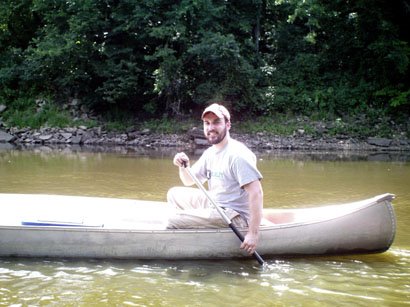
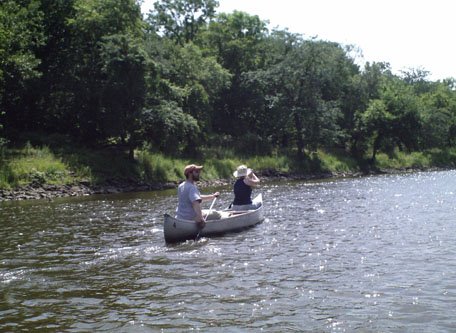
Recent parents T-Bone and Gillymonster took some time off from their new full-time job to enjoy four hours of 104-degree heat index on the mighty Wapsipinicon River today with Grendel and Traca (photos not available). A delightful shore lunch at the halfway point was enhanced by the spectacle of three local boys dropping one after another from a rickety bridge into the sluggish brown current. Canoe Safety Boy declared, as we finally beached his aluminum vessels, that we had "made good time."

7.31.2006

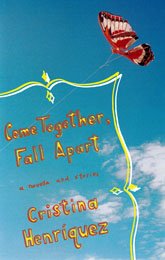
Cristina Henriquez interview: Come Together, Fall Apart

Crstina Henriquez, or cek as we lovingly call her, Workshop class of Ought Three, is the author of the highly praised story collection Come Together, Fall Apart. No less a pantheon member than Isabel Allende says this about it: “These stories, told in a direct and sparse style, are truly unforgettable. Cristina Henríquez's young female protagonists are as haunting as the setting of Panama. I could not put aside this book." All well and good. But what about Sandra Cisneros? Well... "How does a young writer gather the wisdom, heart, and tenderness to write stories of such exquisite humanity? I can only guess she is an ancient soul, a zen master, a bruja, or all of the above."

Let's have a nice, long chat with America's hottest young Latina writer, shall we? Pull up a chair and grab some coffee.

EG: Your book is getting glowing, even breathless, reviews . Way to go. Did you work on these stories in Come Together, Fall Apart at the Workshop? How long did it take to write them and were they published in magazines prior to the book?

CH: The only story in the book that was workshopped is "The Box House and the Snow," which was a story I wrote before I got to Iowa and then submitted for my first workshop (Grendel, I still have your comments on it), although it was in a much different form back then. Otherwise, I wrote only one other story from the collection while at Iowa: "Beautiful." I wrote it the first week I was there, when the reality of going to graduate school was sinking in, and I thought I had better get to work because I was sure that everyone else in the program was more talented than I and that they already had a lot more stories under their belts. I wrote it in a creative frenzy that lasted about three days.

But after that, my time at Iowa was spent working on all sorts of stories set in the United States. "Mercury" is the earliest-penned story, written when I was an undergraduate at Northwestern. And, except for those three, I wrote everything else after Iowa, when I had time to clear my head a bit, when I was just sitting around after we had moved to hot, hot Dallas and I didn't have any friends yet nor even a car to get me out of the house. So all in all, I wrote these stories over a period of about five years, but I was working on other things in the meantime that didn't make the cut.

"Beautiful" was published in TriQuarterly; "Drive" in the Virginia Quarterly Review's special issue called Fiction's New Luminaries, which includes stores from some other Iowa grads; "Mercury" in Glimmer Train; "Ashes" in the New Yorker; and "Chasing Birds" in Ploughshares. That list reflects the order in which the stories were accepted over time.

EG: Can you tell us the story of how your book came to be published?

CH: I'm not sure how far back to start, but basically after I left Iowa, I got an agent and started thinking about shaping a collection. I had some stories set in the United States featuring American characters, and I had some stories set in Panama featuring Panamanian characters. My agent, who is amazing, encouraged me to think about which direction I wanted to go, which set of stories I liked more. I took a good look at all of them and it turned out that the stories set in Panama were just BETTER. The characters were more realistic, more alive, the plots felt less forced, that sort of thing.

For some reason, many of my American stories at that time felt a little cartoonish, very exaggerated and just silly. Which wasn't all necessarily bad, but I hadn't yet figured out a way to make cartoonish, exaggerated, and silly add up to a good story. So I decided on Panama and as soon as I had that path laid out, I worked to round out a collection with more and more stories set there. When I had it all together, I thought, great, it's ready to go.

But then my agent and I discussed the possibility of my writing the start of a novel (she knew I had an idea for one) that we could send out with the collection, to try to get a two-book deal, which is strangely supposed to be easier than getting a one-book deal. So I worked on a novel for a while until I had 100 pages. We did a few rounds of fine-tuning everything and then she went out with it all. The first publisher we heard back from was Riverhead, literally two days after she had starting sending everything out. And I gasped when she told me Riverhead was interested. Because they were definitely one of my dream publishers. They publish what seems like half of my favorite authors. But then another publisher was interested, another passed, on and on it went for a few more days until we had gotten all the bids we were going to get. There was some negotiating. My agent kept me updated. And then I ended up at Riverhead, with an editor and whole team of people who have been extremely good to me. They're incredible.

EG: You have had two -- TWO -- (2) -- dos -- stories published in the New Yorker so far ("Ashes," July 4, 2005 and "Carnival, Las Tablas," July 3, 2006), which is quite unusual for someone of such a relatively tender age. Do you think you'll eventually catch up with John Updike? How did it work getting your stories into the New Yorker? What was the editing process like there?

CH: Oh, I'm going to leave John Updike in the dust. I have a carefully plotted forty-year plan for how to accomplish that. (Reader, do not doubt the existence of this "plan." -- Ed.) Ha! No, it's been one of the very high highlights of my writing career so far to have had two stories published in the New Yorker. "Ashes" was a complete shock. I had sold a few stories by then, but I certainly still assumed the New Yorker was a ridiculous long shot. I had this idea, though, that I should start at the top of the magazine food chain and work my way down because, well, you just never know. I remember Elizabeth McCracken saying that to us once in workshop.

My agent had submitted "Ashes" in the fall and it wasn't until the following spring that we finally heard back that they were taking it. I was working a full-time job then, so my agent emailed me at work: "Call me." My immediate thought was that Riverhead was backing out of the book deal (which we had secured only weeks earlier) or that something equally bad was happening. But I called her and the first thing she said was, "You're going to be in the New Yorker." Predictably, I freaked out. I was running up and down the halls and calling everyone I knew using my work phone and trying to catch my breath. It was fantastic.

"Carnival" was a very different experience, not insofar as I was any less thrilled, but it wasn't so out of the blue. I had been working on that story for a very long time. We submitted it once in a different form and they basically said, it's not ready yet but we'll be happy to read it again if you revise. So revise I did. It was still more or less the same freak out when I found out they were taking it, but I was a bit more prepared for the possibility.

The editing process both times was hands down the most intense editing I've experienced in my life. And both times, I came away from it feeling like I had learned so much. First, Cressida Leyshon (the editor I work with there) looks at the story and suggests changes. They're not so much plot things as line edits, although at times she will say, explain this more, show how this relates to this, that sort of thing. Then a copyeditor gets his or her hands on it and makes a bunch of little changes, a lot of which are simply getting the story to adhere to house style rules (for example, they spell vendor as "vender"). Each time, I see a proof and tell them which changes I accept and which I reject. Then Deborah Treisman submits her edits, of which (for me, at least) there are many. Some of it is really amazing, watching how a sentence can be fine-tuned, for example (I know, I'm not exhibiting that fine-tuning in this interview), or how things might be rearranged for maximum impact. I'm sure there are some authors whose stories don't get as marked up as mine do, and I'm sure there are other authors who aren't really keen on such heavy editing, but for me, it's wonderful.

The other thing I want to say about the process is that you're assigned a fact-checker. Yes, even for fiction. My first fact-checker really went to town on my story. He was calling the Panamanian Embassy and the Smithsonian and lugging books out of the New York Public Library that referenced something in the story. We talked at length about whether chlorine or bleach was a more appropriate cleaning product for the father in the story to be using. The fact-checker was really good about saying, if you mean this to refer to a real place, then I have to fact check it, but if you intend it to be made-up, then I won't worry about it. He also looked for issues of continuity. The one I remember best is that when the mother in "Ashes" sits down on a chair cushion, I had written that the cushion wheezed but, he pointed out, a few lines earlier I had described the same cushion as being completely flat. He blew my mind. But he was great.

EG: What writing advice do you have for young writers hoping to succeed in story-writing?

CH: The first thing I would say is to read as much as you can. Read short stories and novels and nonfiction and poetry. Read stuff that someone recommends even if it doesn't sound like something you would normally be interested in. Just read. A lot.

The second is to be patient. Understand that success is not going to come overnight, whether success for you means finishing a story you love, or getting published. I remember once reading in an interview with George Saunders that he didn't write a story he liked until he was 30. That was very inspirational to me -- the idea that even for a brilliant writer like him, it could take years and years to figure out what the heck he was doing or wanted to do. I mean, I'm young. I know people might look at me and think that the successes I'm finding these days just happened -- presto! -- but I've been writing stories for ten years now, and it's only in the last two or so that I've really had anything to show for it, anything that I even liked. I think it's important for writers who are just starting -- no matter their age -- to know that, to not to have any illusions about what the writing life is going to be like.

EG: What would you say you gained from your time at the Iowa Writers' Workshop?

CH: Man, Iowa gets such a bad rap sometimes. But I had a great time there. It was amazing to be part of a program whose basic philosophy was, here, we're giving you two years to write and not worry about much else. I mean, when in your life will you ever get that again? So I took it really seriously. I set my alarm clock and woke up every morning to write for a few hours and I read in the afternoons and by the time I left two years later I had really practiced writing in a way I never had before. So, for me, the most important thing was that time to practice, practice, practice what I thought I wanted to do for the rest of my life.

Admittedly, I wrote a lot of awful stuff while I was there. But all along I thought that was sort of the point. I saw Spike Lee on Inside the Actors Studio giving advice to the students in the audience, and he said, "Make a lot of mistakes. " His point being that while you're in school, while you have the support of other students and teachers around you, it's the perfect time to make mistakes because people will be there to catch you. It's a good time to try things that may or may not work out, just to see what you're capable of. So I did a lot of that. I wrote a lot, and most of what I wrote were failed stories, but that was okay, even necessary, to be able to come out on the other end with a better sense of what I was not so good at and a better sense of what I was.

Iowa also gave me a sense of purpose and seriousness. I didn't truly start to think, until I got there, that maybe writing was something I could do as a career. I had never before been around so many people who cared so much about writing and who were trying to make a go of it. I gained a sense of craft, as well -- which might seem obvious. I have a few notebooks that I still go back to when I want to look up something Elizabeth said about minor characters or something Frank said about process or something Chris said about dialogue. And I gained friends, some of whom are readers for my work now. And I gained a deep, deep love for Iowa City, which was totally unexpected. I had moved there from Chicago, thinking I was a city girl at heart, and then I ended up adoring Iowa City. I still think that one day perhaps I'd like to get a summer house there, a place where I can sit on the porch and look out at nothing but fields and mosquitoes and the setting sun. There's just something about that place that makes me feel really at peace.

EG: You have focused on Panamanian culture so far in your writing. What is it about Panama that is so compelling to you, and can you tell us a bit about your connection to that place? Is your book being translated into Spanish? Have you had feedback from Panamanian relatives?

CH: I'm half-Panamanian. My father is from Panama. I was eight months old the first time I went, and I've been going for a few weeks almost every year since. All of my dad's family still lives in there, so we stay with family when we go -- for most of my life it was with my grandparents in a neighborhood called San Francisco, and for the past few years it's been with my aunt and uncle and cousins and grandmother (she relocated), who all share one house.

I've been to a number of locales within Panama, but most of my time has been spent in Panama City, doing day-to-day sorts of things like accompanying my grandmother to the doctor and dropping off clothes at the cleaners and going to the grocery store. Because of that, I feel like I have a unique perspective on life in Panama. I'm still an outsider in many ways, definitely, but I've been privy to an insider's perspective in other ways. I actually think that distance has something to do with why writing about Panama works for me. There's enough space between me and Panama for my imagination to take flight. I have some breathing room.

The book hasn't been translated into Spanish yet, but I do know of a bunch of Panamanians who have read it. I've received emails from people living in Panama who have recommended it for their book clubs there, which I love to hear. My cousin has told me that certain characters remind her of people she knows, that someone will make a gesture that only a Panamanian would make -- in other words, that I'm getting things right -- which is immensely gratifying.

In nearly every city I visited on tour, at least one Panamanian would be in the audience, which was always a thrill for me. One girl even knew who my grandfather was. They all seemed to like the book. Someone said that I was sharing Panama with the world, and that sort of freaked me out, because I felt the sudden weight of responsibility, something I'd wrestled with ever since it was clear that I would put together a collection of stories set in Panama. But to hear someone verbalize it, and in such a hopeful way, was scary.

I try to remind myself, though, that my responsibility is not to Panama, per se, but to each individual character and story. Actually, that came up in a more negative way when I was in Panama last year and I went out to dinner with a family friend, who told me she had read the story "Drive." I asked her what she thought about it, and it turned out that she was fairly offended by it. The story features a drug-dealer boyfriend and a narrator who goes to some extreme lengths not to have children, and she started asking me whether that was really how I thought of Panamanians and railing that all Panamanians weren't like that. I told her that I knew that, that they were just characters, meant to represent only themselves, not an entire population. We went back and forth for a few minutes and eventually agreed to disagree, but I doubt she's happy about it to this day. I guess there will always be those reactions. But what can I do? I'm not trying to capture all of Panamanian society in a story, or in a book. I will probably never make the tourism board happy. But that's not my job.

EG: Did you see the recent survey that found Panama to be one of the five happiest countries in the world (Columbia and Costa Rica were in there, too)? Did that surprise you?

CH: I haven't seen that survey! Where is it? (Here. -- Ed.) In a way, I'm not surprised at all. Almost everyone I know in Panama is struggling, but they are happy. They feel like there are certain things they will never have, but I bet if you asked them, they would still say overwhelmingly that they have a good life. The people I know aren't overworked like Americans are. They put more emphasis on enjoying life, enjoying their friends, spending time with their families, than they do on work. Compared with people I know in the United States, people in Panama have much more joie de vivre.

EG: How do you like living in Dallas? Do you have a day job there? What is Ryan up to these days?

CH: There are some things about Dallas that are great -- the gym I belong to, so many sunny days, certain restaurants, my friends, margaritas, the fact that almost every store on earth has a location here so I never have to order things online and pay for shipping. But I would love to live somewhere again where I don't need a car. And I would love to be near at least one really great independent bookstore (Prairie Lights spoiled me!). And I would love to be closer to my family. So I don't think I'll be here forever.

I don't have a day job beyond writing. I do things here and there -- I was teaching at the University of Texas at Dallas, and I help out with the Arts & Letters Live literary festival, and I mentor a few people one-on-one. But for about the past year now, my real full-time job has been writing. Which, I don't think I need to tell you, is insanely, undeniably awesome.

When we first moved here, I got a part-time job working at an independent movie theatre (the Magnolia) in town. I worked there for about three months, shoveling popcorn and tearing ticket stubs, and sweeping up mustard packets after the show. I used to jot down lines for stories on the back of the printed movie schedule we would get each day. I would be standing up at the host stand between films, writing down random lines. Actually, the beginning of "Drive" came to me that way. I wonder sometimes whether I should get that job back because I wrote some of my favorite stuff while I was working there. Maybe there was some weird collusion going on between my brain and being in the theatre.

After that, I worked at the NPR/PBS station here for about a year. I would write on my lunch breaks and at night sometimes and every Saturday and Sunday morning. It was exhausting, but every writer I know has a similar story. If you really want to do it enough, you cobble your life together to make it happen.

Ryan is still working at Travelocity, where they love him and have told him they want to make Ryan clones.

EG: Last I heard you were working on a novel. How is that going? Do many -- or any -- short story skills transfer, do you think, or is a novel a completely different beast to you? Did your wonderful novella "Come Together, Fall Apart" provide some training?

CH: Oh, my novel! I've told myself that when anyone asks, I'm just supposed to say, "It's fine," and leave it at that.

It's fine.

Actually, it's hard to tell. I definitely definitely feel like I have no idea what I'm doing. Short story skills like dialogue, I guess, transfer, but not much else. Or not in my experience so far anyway. Maybe there are more cunning writers than I who can figure out how everything they learned before is now applicable to this other form, but I haven't been able to do that. Even the novella wasn't good preparation. Part of that is because I don't know where that novella came from. I literally sat up one morning and had the idea, fully-formed, just come to me. I wrote the whole thing in sort of a daze. I wish I could remember better how I was able to plot everything out and move forward through time, etc. because it might really help me now.

That said, there are a few things that I've written in my novel effort so far that I really love, that I think are really working. And I trust I'm going to work everything else out with time. As Frank used to say: Have faith in the process. I know that feeling like I don't know what I'm doing is just part of the process. But writing a novel, some days it feels like jumping off a diving board without being sure there's water in the pool.

EG: What are you reading these days?

CH: I've recently read a whole slew of books that I thought were really great. Predictably, I'm reading mostly novels to try to learn from them, study how they hold together, that sort of thing. Gilead by Marilynne, of course. The History of Love by Nicole Krauss. Small Island by Andrea Levy. I just read Miss American Pie by Margaret Sartor, which is a girl's recovered diary from the 70s, mostly as research for my novel, but I liked it very much. George Saunders' newest book In Persuasion Nation. Ishiguro's Never Let Me Go. Fun Home by Alison Bechdel. Oh, and The Scavenger's Guide to Haute Cuisine by a friend of mine, Steven Rinella, which is a nonfiction book about trying to recreate a forty-five course meal using recipes from the great French chef Auguste Escoffier. The kinds of ingredients he had to get -- and the lengths he had to go to to get them -- is crazy. To answer your question, though, right now I'm in the middle of Veronica by Mary Gaitskill. Otherwise, I'm reading various blogs and trying to Google the answers to crossword clues I can't get.