7.31.2006

Cristina Henriquez interview: Come Together, Fall Apart

Crstina Henriquez, or cek as we lovingly call her, Workshop class of Ought Three, is the author of the highly praised story collection Come Together, Fall Apart. No less a pantheon member than Isabel Allende says this about it: “These stories, told in a direct and sparse style, are truly unforgettable. Cristina HenrĂ­quez's young female protagonists are as haunting as the setting of Panama. I could not put aside this book." All well and good. But what about Sandra Cisneros? Well... "How does a young writer gather the wisdom, heart, and tenderness to write stories of such exquisite humanity? I can only guess she is an ancient soul, a zen master, a bruja, or all of the above."

Let's have a nice, long chat with America's hottest young Latina writer, shall we? Pull up a chair and grab some coffee.

EG: Your book is getting glowing, even breathless, reviews . Way to go. Did you work on these stories in Come Together, Fall Apart at the Workshop? How long did it take to write them and were they published in magazines prior to the book?

CH: The only story in the book that was workshopped is "The Box House and the Snow," which was a story I wrote before I got to Iowa and then submitted for my first workshop (Grendel, I still have your comments on it), although it was in a much different form back then. Otherwise, I wrote only one other story from the collection while at Iowa: "Beautiful." I wrote it the first week I was there, when the reality of going to graduate school was sinking in, and I thought I had better get to work because I was sure that everyone else in the program was more talented than I and that they already had a lot more stories under their belts. I wrote it in a creative frenzy that lasted about three days.

But after that, my time at Iowa was spent working on all sorts of stories set in the United States. "Mercury" is the earliest-penned story, written when I was an undergraduate at Northwestern. And, except for those three, I wrote everything else after Iowa, when I had time to clear my head a bit, when I was just sitting around after we had moved to hot, hot Dallas and I didn't have any friends yet nor even a car to get me out of the house. So all in all, I wrote these stories over a period of about five years, but I was working on other things in the meantime that didn't make the cut.

"Beautiful" was published in TriQuarterly; "Drive" in the Virginia Quarterly Review's special issue called Fiction's New Luminaries, which includes stores from some other Iowa grads; "Mercury" in Glimmer Train; "Ashes" in the New Yorker; and "Chasing Birds" in Ploughshares. That list reflects the order in which the stories were accepted over time.

EG: Can you tell us the story of how your book came to be published?

CH: I'm not sure how far back to start, but basically after I left Iowa, I got an agent and started thinking about shaping a collection. I had some stories set in the United States featuring American characters, and I had some stories set in Panama featuring Panamanian characters. My agent, who is amazing, encouraged me to think about which direction I wanted to go, which set of stories I liked more. I took a good look at all of them and it turned out that the stories set in Panama were just BETTER. The characters were more realistic, more alive, the plots felt less forced, that sort of thing.

For some reason, many of my American stories at that time felt a little cartoonish, very exaggerated and just silly. Which wasn't all necessarily bad, but I hadn't yet figured out a way to make cartoonish, exaggerated, and silly add up to a good story. So I decided on Panama and as soon as I had that path laid out, I worked to round out a collection with more and more stories set there. When I had it all together, I thought, great, it's ready to go.

But then my agent and I discussed the possibility of my writing the start of a novel (she knew I had an idea for one) that we could send out with the collection, to try to get a two-book deal, which is strangely supposed to be easier than getting a one-book deal. So I worked on a novel for a while until I had 100 pages. We did a few rounds of fine-tuning everything and then she went out with it all. The first publisher we heard back from was Riverhead, literally two days after she had starting sending everything out. And I gasped when she told me Riverhead was interested. Because they were definitely one of my dream publishers. They publish what seems like half of my favorite authors. But then another publisher was interested, another passed, on and on it went for a few more days until we had gotten all the bids we were going to get. There was some negotiating. My agent kept me updated. And then I ended up at Riverhead, with an editor and whole team of people who have been extremely good to me. They're incredible.

EG: You have had two -- TWO -- (2) -- dos -- stories published in the New Yorker so far ("Ashes," July 4, 2005 and "Carnival, Las Tablas," July 3, 2006), which is quite unusual for someone of such a relatively tender age. Do you think you'll eventually catch up with John Updike? How did it work getting your stories into the New Yorker? What was the editing process like there?

CH: Oh, I'm going to leave John Updike in the dust. I have a carefully plotted forty-year plan for how to accomplish that. (Reader, do not doubt the existence of this "plan." -- Ed.) Ha! No, it's been one of the very high highlights of my writing career so far to have had two stories published in the New Yorker. "Ashes" was a complete shock. I had sold a few stories by then, but I certainly still assumed the New Yorker was a ridiculous long shot. I had this idea, though, that I should start at the top of the magazine food chain and work my way down because, well, you just never know. I remember Elizabeth McCracken saying that to us once in workshop.

My agent had submitted "Ashes" in the fall and it wasn't until the following spring that we finally heard back that they were taking it. I was working a full-time job then, so my agent emailed me at work: "Call me." My immediate thought was that Riverhead was backing out of the book deal (which we had secured only weeks earlier) or that something equally bad was happening. But I called her and the first thing she said was, "You're going to be in the New Yorker." Predictably, I freaked out. I was running up and down the halls and calling everyone I knew using my work phone and trying to catch my breath. It was fantastic.

"Carnival" was a very different experience, not insofar as I was any less thrilled, but it wasn't so out of the blue. I had been working on that story for a very long time. We submitted it once in a different form and they basically said, it's not ready yet but we'll be happy to read it again if you revise. So revise I did. It was still more or less the same freak out when I found out they were taking it, but I was a bit more prepared for the possibility.

The editing process both times was hands down the most intense editing I've experienced in my life. And both times, I came away from it feeling like I had learned so much. First, Cressida Leyshon (the editor I work with there) looks at the story and suggests changes. They're not so much plot things as line edits, although at times she will say, explain this more, show how this relates to this, that sort of thing. Then a copyeditor gets his or her hands on it and makes a bunch of little changes, a lot of which are simply getting the story to adhere to house style rules (for example, they spell vendor as "vender"). Each time, I see a proof and tell them which changes I accept and which I reject. Then Deborah Treisman submits her edits, of which (for me, at least) there are many. Some of it is really amazing, watching how a sentence can be fine-tuned, for example (I know, I'm not exhibiting that fine-tuning in this interview), or how things might be rearranged for maximum impact. I'm sure there are some authors whose stories don't get as marked up as mine do, and I'm sure there are other authors who aren't really keen on such heavy editing, but for me, it's wonderful.

The other thing I want to say about the process is that you're assigned a fact-checker. Yes, even for fiction. My first fact-checker really went to town on my story. He was calling the Panamanian Embassy and the Smithsonian and lugging books out of the New York Public Library that referenced something in the story. We talked at length about whether chlorine or bleach was a more appropriate cleaning product for the father in the story to be using. The fact-checker was really good about saying, if you mean this to refer to a real place, then I have to fact check it, but if you intend it to be made-up, then I won't worry about it. He also looked for issues of continuity. The one I remember best is that when the mother in "Ashes" sits down on a chair cushion, I had written that the cushion wheezed but, he pointed out, a few lines earlier I had described the same cushion as being completely flat. He blew my mind. But he was great.

EG: What writing advice do you have for young writers hoping to succeed in story-writing?

CH: The first thing I would say is to read as much as you can. Read short stories and novels and nonfiction and poetry. Read stuff that someone recommends even if it doesn't sound like something you would normally be interested in. Just read. A lot.

The second is to be patient. Understand that success is not going to come overnight, whether success for you means finishing a story you love, or getting published. I remember once reading in an interview with George Saunders that he didn't write a story he liked until he was 30. That was very inspirational to me -- the idea that even for a brilliant writer like him, it could take years and years to figure out what the heck he was doing or wanted to do. I mean, I'm young. I know people might look at me and think that the successes I'm finding these days just happened -- presto! -- but I've been writing stories for ten years now, and it's only in the last two or so that I've really had anything to show for it, anything that I even liked. I think it's important for writers who are just starting -- no matter their age -- to know that, to not to have any illusions about what the writing life is going to be like.

EG: What would you say you gained from your time at the Iowa Writers' Workshop?

CH: Man, Iowa gets such a bad rap sometimes. But I had a great time there. It was amazing to be part of a program whose basic philosophy was, here, we're giving you two years to write and not worry about much else. I mean, when in your life will you ever get that again? So I took it really seriously. I set my alarm clock and woke up every morning to write for a few hours and I read in the afternoons and by the time I left two years later I had really practiced writing in a way I never had before. So, for me, the most important thing was that time to practice, practice, practice what I thought I wanted to do for the rest of my life.

Admittedly, I wrote a lot of awful stuff while I was there. But all along I thought that was sort of the point. I saw Spike Lee on Inside the Actors Studio giving advice to the students in the audience, and he said, "Make a lot of mistakes. " His point being that while you're in school, while you have the support of other students and teachers around you, it's the perfect time to make mistakes because people will be there to catch you. It's a good time to try things that may or may not work out, just to see what you're capable of. So I did a lot of that. I wrote a lot, and most of what I wrote were failed stories, but that was okay, even necessary, to be able to come out on the other end with a better sense of what I was not so good at and a better sense of what I was.

Iowa also gave me a sense of purpose and seriousness. I didn't truly start to think, until I got there, that maybe writing was something I could do as a career. I had never before been around so many people who cared so much about writing and who were trying to make a go of it. I gained a sense of craft, as well -- which might seem obvious. I have a few notebooks that I still go back to when I want to look up something Elizabeth said about minor characters or something Frank said about process or something Chris said about dialogue. And I gained friends, some of whom are readers for my work now. And I gained a deep, deep love for Iowa City, which was totally unexpected. I had moved there from Chicago, thinking I was a city girl at heart, and then I ended up adoring Iowa City. I still think that one day perhaps I'd like to get a summer house there, a place where I can sit on the porch and look out at nothing but fields and mosquitoes and the setting sun. There's just something about that place that makes me feel really at peace.

EG: You have focused on Panamanian culture so far in your writing. What is it about Panama that is so compelling to you, and can you tell us a bit about your connection to that place? Is your book being translated into Spanish? Have you had feedback from Panamanian relatives?

CH: I'm half-Panamanian. My father is from Panama. I was eight months old the first time I went, and I've been going for a few weeks almost every year since. All of my dad's family still lives in there, so we stay with family when we go -- for most of my life it was with my grandparents in a neighborhood called San Francisco, and for the past few years it's been with my aunt and uncle and cousins and grandmother (she relocated), who all share one house.

I've been to a number of locales within Panama, but most of my time has been spent in Panama City, doing day-to-day sorts of things like accompanying my grandmother to the doctor and dropping off clothes at the cleaners and going to the grocery store. Because of that, I feel like I have a unique perspective on life in Panama. I'm still an outsider in many ways, definitely, but I've been privy to an insider's perspective in other ways. I actually think that distance has something to do with why writing about Panama works for me. There's enough space between me and Panama for my imagination to take flight. I have some breathing room.

The book hasn't been translated into Spanish yet, but I do know of a bunch of Panamanians who have read it. I've received emails from people living in Panama who have recommended it for their book clubs there, which I love to hear. My cousin has told me that certain characters remind her of people she knows, that someone will make a gesture that only a Panamanian would make -- in other words, that I'm getting things right -- which is immensely gratifying.

In nearly every city I visited on tour, at least one Panamanian would be in the audience, which was always a thrill for me. One girl even knew who my grandfather was. They all seemed to like the book. Someone said that I was sharing Panama with the world, and that sort of freaked me out, because I felt the sudden weight of responsibility, something I'd wrestled with ever since it was clear that I would put together a collection of stories set in Panama. But to hear someone verbalize it, and in such a hopeful way, was scary.

I try to remind myself, though, that my responsibility is not to Panama, per se, but to each individual character and story. Actually, that came up in a more negative way when I was in Panama last year and I went out to dinner with a family friend, who told me she had read the story "Drive." I asked her what she thought about it, and it turned out that she was fairly offended by it. The story features a drug-dealer boyfriend and a narrator who goes to some extreme lengths not to have children, and she started asking me whether that was really how I thought of Panamanians and railing that all Panamanians weren't like that. I told her that I knew that, that they were just characters, meant to represent only themselves, not an entire population. We went back and forth for a few minutes and eventually agreed to disagree, but I doubt she's happy about it to this day. I guess there will always be those reactions. But what can I do? I'm not trying to capture all of Panamanian society in a story, or in a book. I will probably never make the tourism board happy. But that's not my job.

EG: Did you see the recent survey that found Panama to be one of the five happiest countries in the world (Columbia and Costa Rica were in there, too)? Did that surprise you?

CH: I haven't seen that survey! Where is it? (Here. -- Ed.) In a way, I'm not surprised at all. Almost everyone I know in Panama is struggling, but they are happy. They feel like there are certain things they will never have, but I bet if you asked them, they would still say overwhelmingly that they have a good life. The people I know aren't overworked like Americans are. They put more emphasis on enjoying life, enjoying their friends, spending time with their families, than they do on work. Compared with people I know in the United States, people in Panama have much more joie de vivre.

EG: How do you like living in Dallas? Do you have a day job there? What is Ryan up to these days?

CH: There are some things about Dallas that are great -- the gym I belong to, so many sunny days, certain restaurants, my friends, margaritas, the fact that almost every store on earth has a location here so I never have to order things online and pay for shipping. But I would love to live somewhere again where I don't need a car. And I would love to be near at least one really great independent bookstore (Prairie Lights spoiled me!). And I would love to be closer to my family. So I don't think I'll be here forever.

I don't have a day job beyond writing. I do things here and there -- I was teaching at the University of Texas at Dallas, and I help out with the Arts & Letters Live literary festival, and I mentor a few people one-on-one. But for about the past year now, my real full-time job has been writing. Which, I don't think I need to tell you, is insanely, undeniably awesome.

When we first moved here, I got a part-time job working at an independent movie theatre (the Magnolia) in town. I worked there for about three months, shoveling popcorn and tearing ticket stubs, and sweeping up mustard packets after the show. I used to jot down lines for stories on the back of the printed movie schedule we would get each day. I would be standing up at the host stand between films, writing down random lines. Actually, the beginning of "Drive" came to me that way. I wonder sometimes whether I should get that job back because I wrote some of my favorite stuff while I was working there. Maybe there was some weird collusion going on between my brain and being in the theatre.

After that, I worked at the NPR/PBS station here for about a year. I would write on my lunch breaks and at night sometimes and every Saturday and Sunday morning. It was exhausting, but every writer I know has a similar story. If you really want to do it enough, you cobble your life together to make it happen.

Ryan is still working at Travelocity, where they love him and have told him they want to make Ryan clones.

EG: Last I heard you were working on a novel. How is that going? Do many -- or any -- short story skills transfer, do you think, or is a novel a completely different beast to you? Did your wonderful novella "Come Together, Fall Apart" provide some training?

CH: Oh, my novel! I've told myself that when anyone asks, I'm just supposed to say, "It's fine," and leave it at that.

It's fine.

Actually, it's hard to tell. I definitely definitely feel like I have no idea what I'm doing. Short story skills like dialogue, I guess, transfer, but not much else. Or not in my experience so far anyway. Maybe there are more cunning writers than I who can figure out how everything they learned before is now applicable to this other form, but I haven't been able to do that. Even the novella wasn't good preparation. Part of that is because I don't know where that novella came from. I literally sat up one morning and had the idea, fully-formed, just come to me. I wrote the whole thing in sort of a daze. I wish I could remember better how I was able to plot everything out and move forward through time, etc. because it might really help me now.

That said, there are a few things that I've written in my novel effort so far that I really love, that I think are really working. And I trust I'm going to work everything else out with time. As Frank used to say: Have faith in the process. I know that feeling like I don't know what I'm doing is just part of the process. But writing a novel, some days it feels like jumping off a diving board without being sure there's water in the pool.

EG: What are you reading these days?

CH: I've recently read a whole slew of books that I thought were really great. Predictably, I'm reading mostly novels to try to learn from them, study how they hold together, that sort of thing. Gilead by Marilynne, of course. The History of Love by Nicole Krauss. Small Island by Andrea Levy. I just read Miss American Pie by Margaret Sartor, which is a girl's recovered diary from the 70s, mostly as research for my novel, but I liked it very much. George Saunders' newest book In Persuasion Nation. Ishiguro's Never Let Me Go. Fun Home by Alison Bechdel. Oh, and The Scavenger's Guide to Haute Cuisine by a friend of mine, Steven Rinella, which is a nonfiction book about trying to recreate a forty-five course meal using recipes from the great French chef Auguste Escoffier. The kinds of ingredients he had to get -- and the lengths he had to go to to get them -- is crazy. To answer your question, though, right now I'm in the middle of Veronica by Mary Gaitskill. Otherwise, I'm reading various blogs and trying to Google the answers to crossword clues I can't get.

7.24.2006

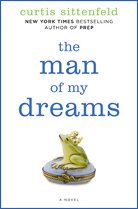
Curtis Sittenfeld interview: The Man of My Dreams

She's back. I'm a couple months late with this, but the author of last year's surprising NYT bestseller Prep (one of the Times' Top Ten Books of 2005) and workshop grad (class of '01) has penned another novel, The Man of My Dreams, which this blogger found even wittier and more satisfying than the debut (as did some other folks). As Alice Munro put it, "The Man of My Dreams is so free of tricks, the honesty is so startling, you feel there's a writer here who isn't trying to beguile you but to lay out some plain, raw truth about emotions and sex. This is a courageous, refreshing novel." We join our interview already in progress...

EG: The novel opens with a kind of fascination about Julia Roberts' wedding in 1991. Hannah is discussing it with her aunt, and only gradually do we learn why she is with her aunt and not her family. This seems like a neat way to do several things at once: establish marriage as something fantastic, idealized, and remote to Hannah; distance her problematic immediate family; and dramatize her isolation right away. Then we skip from year to year, month to month. Can you talk a little about how you decided on this structure?

CS: Each chapter is supposed to be an episode in Hannah's life when her fascination with and anxieties about romance, boys, and men come to the fore. And then, or at least this was my goal, all the boring stuff between big events is just eliminated. These leaps in time meant I could make Hannah's maturity level change. Another big incentive for jumping over time was that I got to entirely skip her high school experience. And after writing Prep, I'd had my fill of high school.

EG: Your dialog reads as utterly real. Do you by any chance record people's conversations (you have been a journalist after all)? Or eavesdrop in coffeehouses, typing out the way people converse?

CS: I record interviews that I conduct if I'm writing a freelance article (something I did more in the past than I do now), and then I transcribe the tape, and transcribing probably has improved my ear for how people talk. But no, I never surreptitiously record people's conversations. Something Frank Conroy used to say was that you don't want dialogue to actually be realistic; you just want it to seem realistic. Most conversations are extremely repetitive and disjointed, and I try to make my dialogue crisper and fasted-paced than it would be in real life.

EG: One part of the book takes place in Alaska. Did you ever do a trip like the one Hannah, Alison, and the two fellows take? Alaska felt real, and I wonder if you had to go there to achieve that. Ethan used to tell us in class that you can be very convincing a lot of times without needing a ton of factual detail.

CS: I have indeed been to Alaska. But actually, I find that when I want to know if a fiction writer has experienced something firsthand which he or she has written about, I'm disappointed whether the answer is yes or no; even though I want to know, I'm disappointed by knowing. So admitting this to you, I feel sort of like I'm letting you down. (Ah, delicate, fragile, writerly me!)

EG: What differences, if any, did you encounter while writing this new book in third person after the first person of Prep? It seems to me your powers as a narrator are well served by this foray into third person. To take just a simple example, you are sometimes able to tell the reader what other characters are thinking and hence clarify a dilemma or conundrum.

CS: I don't always know why I choose the first or third person -- I just sort of try one, and then it works or it doesn't. This book is written in a close third person, so it's definitely very Hannah-centric. I think people's individual wishes and quirks and neuroses are what make them interesting, and are what I like to read about in fiction; I like to want something on a character's behalf. So no matter the POV I'm using, I try to keep readers close to, if not inside of, my own characters.

EG: Hannah's relationship with her abusive father seems to have dampened her relations with men later on. Did you meet Hannah grown-up first and then realize her backstory, or did she grow out of seeing a fourteen year-old character whose dad can't control his anger? Did she withdraw from men partly out of fear of her father?

CS: The first section I wrote was when Hannah is in college interning at an ad agency for the summer and has a really awkward drunken hook-up with a co-worker, and then I decided to write about her before and after that incident. While I would say that of course her relationships with men are influenced by her father, I also wanted to avoid a simplistic "A leads to B leads to C" type of storyline. I always see Hannah as being her own agent, and being complicit in all the relationships she has.

EG: Oliver was the most interesting and vivid male character to me. Would you talk a little bit about how you came up with him?

CS: I get different feedback about him -- some readers think he's charming, and some think he's scummy. I thought it would be interesting to create a character where his flaws are explicit, they're a given, and then look at the reasons why people are drawn to him anyway. Certainly I think people like that exist in real life.

EG: Did you feel yourself growing as a writer during this book? I ask because comparing Lee (from Prep) and Hannah, you seem to have taken Hannah farther along in development, and I wonder if that parallels your own growth as a writer in some way?

CS: The book follows Hannah into her mid-to-late 20s, so she's an official adult, whereas most of Prep takes place in high school, and even though Lee is narrating the story in retrospect, the details about her adult life are intentionally murky. I think The Man of My Dreams is in fact a more mature book, but it's not because of Hannah's age; it's because of technical and structural issues -- it's more tightly written and faster-paced; it's a tad less self-indulgent.

EG: Do you revise stuff as you go along, or get it all out and then go back and start slashing?

CS: Both. Chris Offutt once recommended looking only at the last line of what you wrote the previous day and then pushing on, and going back only at the end. And I think of that suggestion often, even though I don't usually do it. But I strongly believe that sometimes you have to write something wrong -- and you might even know it's wrong as you're working on it -- in order to write it right. It's impossible to fix a piece of writing when it's in your head rather than on the page. Of course, when you put words down on the page, and they're really cheesy and graceless, it's discouraging. But then, ideally, you make them better.

EG: How did you decide what to do with the last chapter? Not to give too much away to those who haven't read it yet, but it's epistolary. Was that something you imagined doing early on, or did it evolve out of getting to that point in the book?

CS: The letter form was a bit like choosing the third person point of view -- I decided to try it, it seemed to work, so I kept it. It's a letter Hannah writes to her former therapist, whom she hasn't seen for a few years. The therapist has told Hannah to drop her a line and tell her what happens after Hannah moves from Boston, and Hannah doesn't know if she really means it -- if writing to the therapist is a self-absorbed gesture, or if not writing to her is rude. I'm intrigued by how people do or don't stay in touch, or do or don't cross paths years after first knowing each other. It can be quite surprising and different from what you'd anticipate.

EG: Time magazine called you "the Faulkner of awkwardness." Do you think you notice the various tensions in situations more than most people? Are you always wondering what people are thinking as you observe them? In talking to you face to face, I must admit I can almost feel your intense curiosity emanating off you in waves. Do you get a lot of people who say your work hits too close to home, or that it's almost embarrassing to read because they feel so keenly for the characters? Where do you think this fervor to absorb so much about someone's character comes from?

CS: Wave-emanating curiosity?! Okay, now I'm the one cringing!! In all honesty, I secretly suspect I'm kind of a dull person, with nothing in particular to say most of the time, so that might be the source of the curiosity you refer to -- that I'm moved to ask people questions because otherwise I'd have nothing to contribute to conversations! All this said, I like to believe I'm socially normal, much more so than my characters.

But yes, some people do say that reading my writing makes them wince and squirm because it's too uncomfortably real. I guess I'm interested in the times when there's a discrepancy between what people are expressing and what they're really thinking and feeling, and that discrepancy often arises in moments of awkwardness. Plus, when there's awkwardness and tension, we're more alert, even if it's not in a desirable way.

EG: Your style is very precise, clear, sharp, and solid, etc. (for lack of better words). The reader doesn't have to guess anything or fill in the blanks. Which writers have taught you the most about style? Whose style do admire among contemporary writers?

CS: I have two contradictory theories about clarity in fiction. On the one hand, I feel like the writer is working for the reader, and I want to give the reader an enjoyable, palatable reading experience. On the other hand, I try to write with the assumption that readers are intelligent, to appeal to the highest common denominator, because I like books that allow me to figure things out for myself and don't over-explain a concept. (Alice Munro allows this, and I just finished The Line of Beauty by Alan Hollinghurst, which I thought was fantastic and definitely assumes the reader's intelligence.) So maybe what I try to do is make situations clear -- I hate when a writer has so little control of her material that you can't tell when or where something is taking place -- but use a lighter touch with ideas. One example of a person who does an excellent job writing clearly but not simplistically is our very own Ethan Canin.

EG: You've done some work on Ira Glass's "This American Life" radio program. What's that like? Do they assign you projects, or do you bring an idea to them and they give you recording equipment?

CS: I've pitched ideas to "This American Life," and they've rejected some and accepted a few. Once they accept an idea, they send me recording equipment, I talk to a producer about the structure of the piece, then I do the recording. Sometimes I have to go back and re-record additional interviews because there are holes. The biggest frustration with radio pieces, and the main way they vary from print articles, is that I can tape someone saying something so funny and great, but if the sound quality is poor, I can't use it; you have to focus on technical issues beyond just pure content.

Working with the "TAL" producers, including Ira Glass, is wonderful -- as fans of the show might imagine, they're so smart and funny and they're also amazingly nice and patient (I think because they're used to working with radio novices). You get off the phone with them enjoying this lovely illusion that you're new best friends. The only potential downside to working with them, and it's something I respect but it can also feel inconvenient, is that you might spend 20 hours on the phone working on a piece that's 12 minutes on the radio. They're perfectionists. And again, I admire this, but there have been times when I've been on the phone with a producer for three hours and I've had to say, "I'm really sorry, but I feel weak with hunger and I need to pee -- can I call you back in 10 minutes?"

EG: I was trying to come up with a concise theme so far in your two novels, and the best I could do is something like this: Everyone is weird, conflicts should be faced head on, and you can learn to like yourself if you remain honest. How would you summarize your thematic concerns so far? And how do you think they may develop in the future?

CS: Describing your own writing, or the themes in it, is like describing your personality; you're the least credible person on the topic. So I'll just say I think you've done a good job describing my work for me. As for the future, I'll always hold a special place in my heart for girlish angst, but I suspect I'll also tackle other subjects.

7.21.2006

J. C. Hallman reading tonight


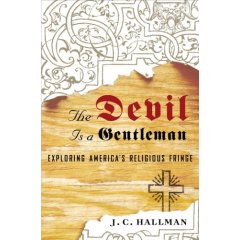
Chris Hallman will be reading from his book, The Devil Is a Gentleman: Exploring America's Religious Fringe, tonight at 7 at Prairie Lights and on WSUI AM 910. See the recent interview Chris did here on Earth Goat, and the one he did on Bookslut, for refreshers on why you want to go to this reading. He is a very good reader as well. Should be a good time. He has expressed interest in getting reacquainted with the Fox Head afterwards, and then we will head back to Earth Goat headquarters for more drinks, more conversation, and general debauchery.

7.20.2006

Best Cartoons Ever

http://www.youtube.com/watch?v=OVgUILM1j3A

Heading Back to Ioway


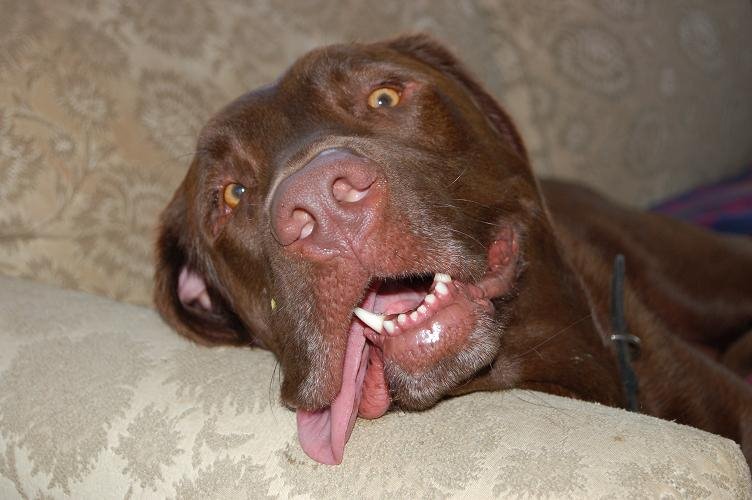
I'm flying back to Iowa for two weeks to welcome Mary Frances to the world. However, due to my daily beach going and my twice-a-day Dunkin Donuts habit (there are literally 6 -- 6! -- repositories of deliciousness between my home and work -- about five miles) you may not recognize me, so I thought I should post a picture.

Dave Alvin tonight at the Mill

The terrific songwriter, founder of The Blasters, and ex-X lead guitarist is headlining a show tonight with his band The Guilty Men. Apparently he's now into country. 9pm. $15. Energy: High.

7.18.2006

News from the Move


So, me and the two hounds are in New England (George says Hi, Pogue is too busy trying to figure out how to open the basement door, but she might talk to you later). I have a bed on the floor, a chair I got dumpster-diving on the way to work (while wearing my tie, which I was very proud of), my guitar and an amp the size of a shoe box, a stereo, and a papasan from Pier One. I feel like I'm in Chad's old heroin apartment -- it's really wonderful. The wood floors and empty rooms make rocking a very satisfying experience.

I live in Padanaram Village -- and it's gorgeous, with private beach access where I can look out across the water at Martha's Vineyard. The local "George's" is right on the water -- the bartender is Beth, and she is a big fan of Wally Lamb. Any and all must come visit.

The other day I was walking the dogs while wearing one of my old Iowa Young Writers t-shirts and this car came to a screeching halt in front of us. I panicked, George panicked, Pogue tried to use the opportunity to go after a cat. It turned out the woman who lives three doors down from me just had a son come back from Young Writers. He was in Arda's class, and apparently loved it. He has a green Volvo with a sticker that says "Listen to Black Sabbath."

So, come one, come all -- and bring a bathing suit.

7.17.2006

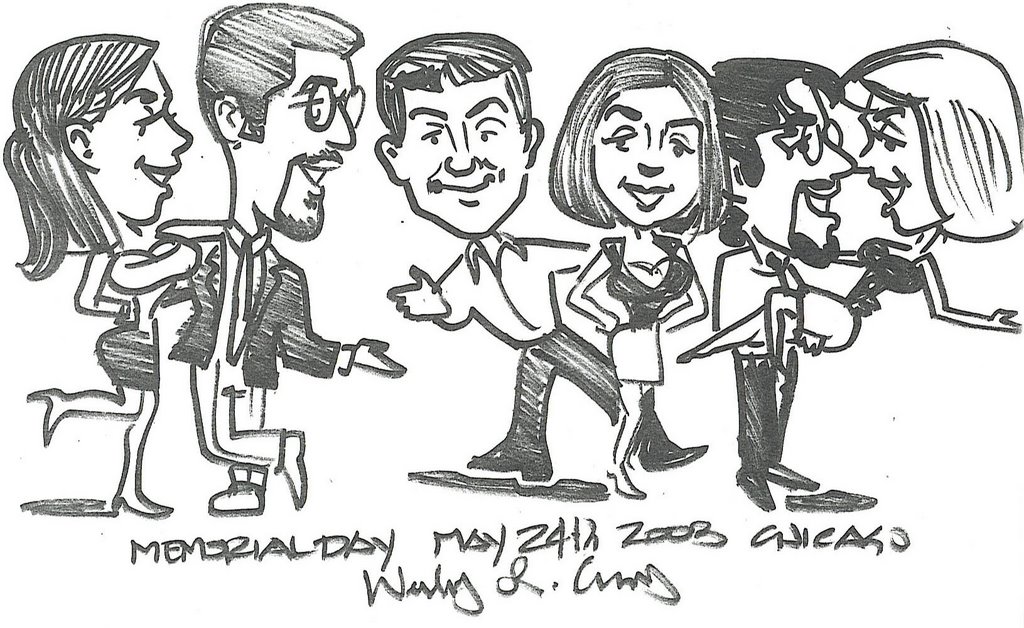
The kind of thing you find when you're moving and cleaning out drawers


This is from a little over three years ago. Six of us were in a Chicago bar, and some artist drew this surreptitiously and brought it over. Of course, we bought it. In left to right order: Toad Press, dunkeys, Grendel, traca da broon, Vampiro, and Mrs. Vampiro. I think it's kind of disturbing just how well he captured us. Especially the waistlines. He got those just right.

7.14.2006

Free plants


As we are moving, we need to part with our leafy and spiny friends. Let me know if you'd like to come over and adopt one or more.

7.13.2006

Summer reading

Whatcha readin'? Most of my reading time is taken up with novel research stuff, but I've managed to slip in other stuff recently, too:

Valis. A romp through madness, paranoia, conspiracy, and healing riding a strange bucking bronco combination of autobiography and science fiction. Pretty funny, too. Reminded me of Vonnegut. Philip K. Dick's star has risen steadily since his death in 1982 because his stories tend to make good films.

Speak, Memory. About a quarter of the way through Nabokov's autobiography so far, and it's living up to the hype. Luscious sentences often containing breathtaking snark. I'd kill to write prose like this.

American Gods. I really wanted to love this, but it didn't do it for me. The style was too breezy and had stretches of slop and awkwardness, the protagonist was too remote and flat, and the detective story ending was laughable. Great idea, but it has to be all about the execution. I hear Anasazi Boys is better, but I dunno, now I am a tad wary of Gaiman. Someone defend this, because too many people I know liked it.

The Devil Is a Gentleman. Very good survey of modern American religious fringe movements, using William James as a touchstone.

Oxherding Tale. This novel was outstanding. Hilarious and heart-breaking and extremely well written. And short. A jewel. If you can imagine a comic novel about slavery ... oh, you can't? Seek it out. Read it. Made me want to read all of Johnson's works.

Red Earth, White Lies: Native Americans and the Myth of Scientific Fact. I don't swallow all of the author's assertions, but he does a formidable job of puncturing the myth of scientific impartiality and biaslessness. He retells the history of Indian settlement and white anthropology in America, uncovering systematic, often shocking racism. As it turns out, he was more right than wrong, as more and more scholarship agrees that no, the Indians did not exterminate the mammoths and other megafauna, and no, they didn't arrive only 11,000 years ago, and no, they were not poor stewards of the land. Perhaps the most fundamental bias has been that anthropologists simply don't take Indians' stories about their own origins seriously, preferring to weave their white, agenda-laden fantasies that take decades, in some cases a century or more, to dislodge.

American Indian Myths and Legends. Fantastic collection of rich, rich mythical stories. Better than the Bible.

7.06.2006

The lovely Paula Morris...

...will be reading from her lovely novel, Hibiscus Coast, at the lovely Prairie Lights bookstore, Monday, July 10th @ 7:00 p.m.

Lovely.

6.30.2006

Cristina Henriquez in the New Yorker again this week

In case you haven't cracked it open yet. This is number two for her, which is wonderful. Haven't had a chance to read it yet myself, but there is a long weekend beginning today.

6.29.2006

Adios, muchachos


Tomorrow morning I will point my car East and head out of town for the saltier and more donut-strewn environs of South Dartmouth, Massachusetts. My house is four blocks from the ocean. Feel free to visit.

I will miss Iowa City terribly.

6.27.2006

Consider the gonopodium

Editing a book about aquariums, in the fish-breeding chapter I encountered the fact that male fish "develop a stiff, rod-like appendage called a gonopodium," with which they impregnate the female. What a grand word the little fish gets for his member! (The female's organ is called the vent -- yawn.)

But gonopodium! Man alive. Why do mammals get the camparatively flabby, humiliating penis?

Anyway, the author goes on to mention that far more fry (baby fish) will be produced than you can possibly ever raise, and to use the extras as "feeders." She then goes on to cheerfully recommend inbreeding. Take some of your second-round fry, she says, and "breed the males with their grandmothers" in order to achieve whichever of her characteristics you're going for.

In my comments to the author, I mentioned the fact that some people might be put off to discover that their breeding program will actually turn into Soylent Green for fish. And I thought that she should really think about addressing the reader's likely alarm/distaste at being told to breed a fish with his grandmother. Regarding the latter issue, I wrote:
I don't see how you can let this incredible subject matter slide by as if it's ho-hum, as if it won't shock and even dismay the beginner!
To which she replied:
Why in the world would it shock a reader? It isn't like these fish are married and paying child support and know each other in family groups. Like these fish would not breed anyway if you tossed them in a tank?
I wrote:
Some people will throw the book at the wall right here. You have got to address the discomfort such a scheme will DEFINITELY produce in most beginning readers. Besides the opportunity for humor ... this is the richest motherlode I've seen in 14 years of editing!
She replied:
I don't think it is funny at all. You are making a big deal out of something fish do naturally, and that every hobbyist does. You think readers visualize fish calling for mates from the pet store? People are not that shut in. We are talking about cold-blooded fish, not humans.
After much back and forth, I wrote an example of the two disclaimers I'd like her to put in, and she accepted them and said to just put those in. First, I tackled death:
Beginning a fish breeding program brings with it some humane responsibility. Fish that you produce through breeding should, as they do in the wild, find their place in the biological ecosystem. Some species produce dozens or even hundreds of young. It's doubtful that you will want to keep every fish that your breeding pairs create. You should make every attempt to raise these fish, sell them, trade them, or give them away to good owners. If you think you cannot do these things, it may mean using excess fry to feed larger fish. Although this situation is found in nature, if you don't like the sound of you yourself doing it, then breeding is not for you.
And finally sex:
Inbreeding in mammals causes genetic defects, and many people find it a distasteful topic generally. However, in the fish world, it happens all the time. Sometimes survival depends on it. Fish inbreeding should not be thought of in the same light as for higher animals. However, it's possible that no amount of evidence or argument can get you over that hurdle. If that is the case, then inbreeding to produce new strains of fish is not for you.
She accepted this, but she still thinks I'm nuts. Am I?

6.21.2006

"one big fiesta for illegal aliens and homosexuals"

Those of you who regularly follow political blogs and/or read Frank Rich's column (good times) will already be familiar with the line. But have you heard the actual radio ad? Mariachi music is prominently involved. Spectacularly offensive. I wouldn't believe it was real if it weren't on the candidate's site.

6.17.2006

Slipstream?

What do Carol Emshwiller, George Saunders, Aimee Bender, Bruce Sterling, Ted Chiang, Jonathan Lethem, Kelly Link, and Michael Chabon have in common? They're all in Feeling Strange: The Slipstream Anthology. Anyone read this? It looks pretty intriguing to say the least. My wallet is itching. Thanks a lot, gwarbot, for leading me to this book.

Described as the "literature of cognitive dissonance and of strangeness triumphant," slipstream is supposed to come off as "hauntingly familiar and very, very strange." Bruce Sterling coined the term in an essay 17 years ago, which a Booklist review says meant "a kind of story that was neither sf nor fantasy, exactly, but that was showing up in all the places that sf and fantasy did; a kind of story that used sf and fantasy elements within otherwise realistic, or at least consistent, settings to provoke a feeling of strangeness or, better, feeling at home, strangely."

6.13.2006

J. C. Hallman interview: The Devil Is a Gentleman

Chris Hallman, Fiction class of 1991 and author of The Chess Artist, has published his second book: The Devil Is a Gentleman: Exploring America's Religious Fringe. The book is a vivid account of his personal experiences visiting eight different modern American religious groups, including The Church of Satan (make it your home page, folks), the Unarians (a UFO religion), Scientologists (I will not be linking to this one), Christian Wrestlers, American Athiests, Covenant of the Goddess, and the Monks of New Skete. Chris will be reading from his book at Prairie Lights July 21st.

Not content to simply report the insights gained by spending time with these organizations, Hallman deepens the whole kit & caboodle by weaving it all into an American zeitgeist uberstory via some terrific William James scholarship, channeling the father of American Philosophy and Psychology into pluralistic wonderment and teasing out numerous surprising parallels among ostensibly very different religious doctrines. This reader was up very late three nights in a row gobbling this stuff up. Well written and, it seems to me, of some importance, the book recounts a series of adventures into the spiritual bent of life now in our bizarre, pious empire.

See the San Francisco Chronicle review for another enthusiastic take on it. And without further ado:

EG: Can you summarize for us the basic tenets of William James's philosophy? What made him different among the intellectual giants of his day?

JCH: From a writer's point of view, James is probably most remarkable for being the origin of "stream of consciousness." This is James's metaphor for how the brain works -- he first conceived of it in 1880, and published it later in the decade. Obviously, this has had a big impact in how all kinds of narratives are executed. Gertrude Stein, for example, was James's student and worked with him on studies on automatic writing that probably influenced her later work.

The stream of consciousness filters down to all of literature. Stories weigh in on the same thing James was after -- the action of the mind. More generally, James is thought of as the father of the science of psychology, though he wouldn't have followed either of the paths it took after he died -- psychoanalysis and behaviorism. He was also the author of The Varieties of Religious Experience, which helped kick start the field of comparative religions and which I took as my model for The Devil is a Gentleman. And he helped found Pragmatism, which meant, in brief, celebrating variety even in something like truth.

EG: The world, including America, with the rise of fundamentalism and hardening of rigid religious doctrines, seems at present to be going in the opposite direction from William James and his pluralism and Pragmatism. What led you to write about William James now?

JCH: Coming to James was really kind of an accident. I was broke after my first book came out, looking for something to write about and trusting my curiosity. I heard about this UFO cult in California whose prophecy of nearly three decades was about to fail. I could barely afford to go to their first meetings after the prophecy fell apart. But I did go -- on the hope that it would be something that I could write about. That gamble paid off.

While I was out there I had the idea that the people I was visiting might capture something about what I remembered of William James. I bought Varieties again and took a look. It fit nicely, and I was on my way. James applies just as well now as he did a hundred years ago. The battle lines are pretty clear: the right, religion; the left, secularism. Ironically, James was a liberal who wanted to defend and justify religious experience. Not religious organization, but experience. So what he ultimately does, as a thinker, is attempt to heal that basic rift in the world. He applies not only to that goofy UFO group, but to everyone else as well.

EG: How did you choose which religious groups to visit? Did James' work itself lead you to investigate specific modern American religions, or were the James scholarship sections retrofitted to address different aspects of James's thought that seemed to emerge from your experiences with these groups?

JCH: I limited myself to groups that had a strong American component and came about in the 20th century. But those were just loose rules. The James influence went both ways -- sometimes the research led me to one group, other times it was the other way around. For example, the first scholarly paper I read about Scientology said that L. Ron Hubbard had once listed his sources for Dianetics: Descartes, Taoism, Korzybski ... and William James. I kept finding connections all over the place.

EG: In the chapter on Anton LaVey's Church of Satan, you describe them as "good guys," and I was struck by the fact that they were the only ones who didn't take themselves totally seriously. What did you make of the fact that here you have a religion which the adherents take with an apparent grain of salt? They seemed to be having the most fun. I'm thinking of their clothing and weaponry fashions and their heavily stylized rituals that appeared to be performed with a tiny bit of tongue-in-cheek.

JCH: What was interesting to me about the Church of Satan was that they took ritual very seriously even though they didn't believe in a literal deity. Their rituals had the power of satire, however you would describe that. Which accounts for the fun part. They weren't alone in being the good guys, though. The more benign groups, in general -- the witches, the druids, the monks of New Skete -- all found a way to celebrate individuality and creativity, and usually did so by leaving their beliefs abstract. In general, when beliefs, as in fundamentalism, become too literal, they head toward what James called "the wrong side of religion's account." Then they're capable of what even the Church of Satan would call "evil."

EG: You mention in the book that the Scientologists followed up with phone calls for six months after you left them. Have you heard their reaction to the book? Was your publisher nervous about including that chapter?

JCH: Well, I can still talk to you about them, so that's good. No reaction from Church officials, but Tom Cruise keeps leaving me voicemail. As to my publisher, nervous is probably not the right word. Let's just say they paid close attention to that chapter.

EG: After the Christian Wrestlers chapter, in several places you mention annoyance at the theatricality and entertainment component of their spectacles. What do you think James would have made of the rise of megachurches in the U.S.?

JCH: James hated everything big. The corporate sentiment ruined religion, he would have said, and did so long before anything like megachurches came along. He would have said the ceremonies, such as they are, were full of "second-hand automatisms." For James, religion was how one struggled with life. It was hard. He would have been much more interested in the Christian Wrestlers, whose shows at least pantomimed a struggle.

EG: The saddest group, to me, were the Atheists. Their numbers pitiful, their gathering cynical, disorganized, and argumentative. They seemed like lonely souls who weren't quite comfortable even with each other. You make the point that Atheism takes on some of the forms of religions. What made you include them in your book?

JCH: When you write about religion, you can't possibly be comprehensive. There's just too much there. All you can hope to be is representative. That's why I included atheism. Ultimately, even non-belief is a form of religion because it, too, is an unfalsifiable hypothesis. The American Atheists were struggling, it's true, because their leader had died and they were trying to keep the movement going. This made them similar to some of the other religions I was looking at, and gave them a certain poignancy as well.

EG: You visited the "dog monks," the Monks of New Skete. It's the last chapter, and you say in it that they were perhaps the group that you felt closest to. They are also the ones closest to being part of a long-established and organized religion (Eastern Orthodox). What is it about a religion that's in it for the long haul, compared to new groups that haven't had as long to perfect their rituals and beliefs, that was able to hold you better in its embrace?

JCH: Actually, it wasn't the age of New Skete or Orthodoxy that drew me at all. All religions try to give the sense that theirs is a long-standing tradition, with deep roots. For non-traditional systems, this often means harkening back to what can be discerned of pre-Christian religion. But really most of them -- and much of Christianity as it's practiced today -- are modern inventions.

I liked New Skete not because it was old, but because it didn't apply tradition uncritically. It celebrated individuality and creativity. They accepted the world as it stood, with all its variety, and in this way they embodied something central to James.

EG: How does the famous dog breeding and training program fit into the spiritual life of the monks?

JCH: The monks are generally pretty wary of being pigeonholed as dog monks. It's caused them some problems. Nevertheless, they did talk to me about how raising dogs informed their faith. A central characteristic, even a defining characteristic, of religion is that very often it's based on hierarchies, whether it's deacon-priest-bishop-cardinal-pope in Catholicism or the various stages of enlightenment leading to "clear" in Scientology. Often it's a kind of disappointing aspect of religion, at least to an outsider, because it seems to echo military ranks. The monks had an interesting take on this. The relationship between a man and a dog is hierarchical, and so is the relationship between man and God. A dog is most happy when it knows its place, when it rises as high as it can in the pack and finds its proper location -- with people, that place is a step further down the rung. This is roughly analogous to how people can understand their relationship with God. Less, but not necessarily subservient. That relationship helps to raise people up to what they can be. It's like leaven, one monk told me.

EG: Early on you mention William James's experiments with mind-altering substances. I understand James was a fan of nitrous oxide. Did he have religious experiences on it? He also tried mescaline, though I believe he claimed it had no effect on him. What was James's take on the role of altered consciousness in religion?

JCH: James did dabble. As a guy who was interested in varieties of consciousness, he sort of had to. But it's actually incorrect to say that he had religious experiences from drugs. He said repeatedly throughout his life that he never had a true religious experience, and the closest he came had nothing to do with substances of any kind. Ultimately, James's experimentation says more about his open-mindedness than it does about a link between drugs and religion.

EG: Your tone throughout the chapters is very even-handed and respectful, even though you remain skeptical and deliver to the reader what you think about each belief system. How did you arrive at your own perspective and point of view in the book? I mean, it must often have been tempting to ridicule or go for a big laugh at the expense of some of these people -- I'm thinking of the Unarians, the UFO cult. Yet you resist that and instead give the reader a kind of unvarnished and often touching and charming picture of these people and what they are doing.

JCH: I wanted to have it both ways. Some of these groups are pretty odd, you can't get around that. But there's something about the world, and about these belief systems, that makes them attractive to people -- they have adherents. I wanted to get at that, to portray these people in such a way that you began to get a sense of what was potentially attractive about them. Partly, too, it was a technical problem: Can you describe a Christian wrestling match in such a way that a sophisticated, skeptical reader came to care about the outcome?

EG: Have your own views of religion changed as a result of writing this book?

JCH: I became more Jamesian, more forgiving probably. The oddness of the world surprises me less.

EG: William and his literary brother were close their whole lives, though they had their differences. Do you see any influence of William's thinking on Henry's fiction?

JCH: Definitely. This brings us around full circle a bit. Henry was very interested in William's work, while William was just baffled by Henry's. So I think it's possible to measure William's influence on Henry, and there have been scholarly efforts in that vein. For Henry, I think, William was tapping into some of the basic irreconcilable ambiguities about existence. William wound up wanting to resolve those, but Henry, I think, chose to take them as simply a description of how the world worked, and wanted to employ them. It's interesting -- fiction, ironically, is the only place where we get certainty. If your husband tells you he loves you, you choose to believe him. But if a narrator tells us A loves B, you can take it to the bank.

Henry James begins to tinker around with this after his attempts at theatre failed miserably in the mid-1890s. He experiments with ambiguity to capture a part of reality and to create drama. It's not a stretch to say that this is another way in which William James, whose major work on psychology appeared in 1890, helped give momentum to the literature of the twentieth century.

EG: What are you working on now?

JCH: I'm writing an article about Pleistocene rewilding for Harper's magazine.

6.09.2006

A very interesting detention basin in Des Moines

Yes, Iowans really are this innocent... (via Rigorous Intuition). To paraphrase Sepka the Space Weasel, imagine future archaeologists finding something like this.

6.07.2006

Loose id dreaming

I've always had extremely complex, wild, epic dreams, and ever since I first read about lucid dreaming in the early '90s, I've been trying to control them. I've had limited success. Probably once a year I've managed to fly, sometimes only a few feet, sometimes up to a roof, and one memorable time I was on my bike flying around my parents' neighborhood in Indiana.

I spent the past five days in South Carolina at a family reunion on the coast. Early Sunday morning, with the sea wind bending palm spikes to scratch against my window, I had the most extraordinary dream, even by my standards. At some point I recognized the dreamworld and remembered that I could fly if I wanted to. I gathered my strength and concentrated and -- whoooom! -- flew straight up into the atmosphere! Where I spotted a menacing UFO directly above me, which in turn spotted me and swerved down to investigate.

(Flying saucers have been appearing in my dreams since I was a small child. I've seen them take my father away, I've watched them destroy San Francisco.)

It nosed at me, like a dog. Its surface looked like the graphics in the movie Tron, unfinished, conceptual. I had a weapon on me, some kind of rifle, and I dearly wanted to blow the damned thing away, but something told me there would be trouble if I did that, so I decided to escape. Remembering I was dreaming, I ... went to sleep! And there I was on my bed asleep, the UFO gone. So I got up and opened my door and found I was still dreaming and walked into my dream city.

My dream city is always the same city, a hodge-podge alien urban psychedelic weirdworld where I often travel by running along the rooftops. This time I found Tracy in a park and excitedly reported my new power. She asked me to show her, and I went flying straight up again -- careful to not go high enough to attract UFO attention. When I came down she asked me to teach her. We tried, and she levitated about three feet off the ground. A good start. Then we went shopping. We went to a rope store, one of those big, fancy, elaborate places where you buy ropes, you see. The shopkeeper was measuring out our rope, and from sheer exuberance I took one end of it, rose to the top of a tall spruce tree in his atrium, and tied it to the highest branch. When I came down the two of them were clapping.

Then Tracy and I went to a show at a vast theater complex. And then dinner. At dinner, she pulled out some magazines she had published, and she was on the cover of each of them. Except the women were different "hers," if you know what I mean. They each were her, but they were each a different version of her, and they all looked totally different. While I was oohing and ahhing, a fellow at a nearby table drifted over. Said he couldn't help but overhear, said he was a bigwig, and offered to be her agent. I saw that somehow he had managed to be standing over me, the crotch of his jeans a few inches over my head, in the posture of a dog peeing to mark his territory. Remembering I was dreaming, I bolted up and said to him: "Are you really trying to pee on me, or are you a symbol in a position to pee on me figuratively?" His smile fell, and he backed off a few steps. But then I felt mean, and out of guilt we listened as he continued his pitch. All we had to do, he said, was watch his multimedia presentation and then decide if we wanted him to be her agent or not. So we went into a booth and watched a screen.

The screen soon filled with extraordinary imagery, marvelous landscapes, mythic personas, a constantly changing spectacle that was truly impressive. But I started thinking, hey, this is my dream. Not his. I should control the imagery. So I pointed my finger and tried to burn a hole in the picture. Sure enough, like a film getting stuck and melting from the heat of the projector lamp, a small hole appeared in the fantastic show. I started making gestures, such as shamans are said to make in order to manipulate reality, and gradually I was able to tear the imagery apart, and even to crush some of the characters onscreen by squeezing my hands. Their heads popped, bloodily. It was immensely satisfying. Then we were back in the booth and we got up and left the building.

"Oh, but look at him now!" said Tracy when we got outside.

There was the guy who would be her agent, except now he was older and decrepit, shuffling along the street in ragged clothes, panhandling.

"Ah, jeez," I said. I felt terrible. "Did I do that to him? Okay, let's give him some money." I walked over to an ATM machine, inserted my card, and the screen showed me asleep again, as I had been when I escaped the UFO.

Only it really was me asleep on the bed this time, and I shot up, wide awake, my brain buzzing from dream chemicals, the insects outside screeching about their own dreams, it seemed to me. I grabbed my video recorder and began recording myself recounting the dream in as much detail as I could remember. In the middle of it, the video camera's battery died -- see? the machines don't want me to remember a thing like that -- so I quickly plugged it into the wall and resumed. When I was done, I walked down to the beach. It was 4:15 am.

I sat there looking at the ocean, feeling that I had crossed some kind of threshold, achieved a new measure of control in my dreams, and maybe even in my life. I felt more confident and joyous than I have in some time, and yet at peace, watching shiplights glimmer on the dim horizon. As in a video game, I had reached a new level, but I also knew that there were many other levels above that, and that the dreamworld is under some kind of military dictatorship, via those damned machines that terrorize from the sky.

I was also troubled to discover that the rule of morality of action, the karma law, is also in effect there. I had hurt that man, that character, whose job it seems was to show us his presentation, and when I destroyed it, I ruined his purpose, put him out on the street. I fired him. And then saw and felt the consequences of my actions. Are characters in dreams separate entities who share that reality? Are they forms melded in my subconscious? Does it matter?

I don't now how long I sat there in the sand. I felt extraordinarily alive and snug within my own purpose, my own expanding abilities in this short time on earth (I recently turned 40). I look forward to the new levels. I dare not hope that the abilities, as the shamans claim, eventually cross into the physical realm, but if they do, I guess what I'm doing now is practicing.

6.02.2006

In Case You Called . . .

For four days last week/weekend, the voicemail system for SBC (nee AT&T) went down . . . for the *entire* state of Nevada. Four days!

That's not even the weird part: I've just been doing Google searches to see what articles were written about this in the news . . . and I can't find a single one. Not in the local newspaper (a Gannett subsidiary), not on SBC's website, not in the Vegas papers, not CNN.com. Nothing.

Maybe I'm stupid ("maybe" is being kind), but isn't this news-worthy? The silence is surprising and even a little unsettling. Such a widespread technological failure followed by an entire lack of coverage is something I've never encountered before, not once in my life. Anyone else?

Four days! The whole state! Not one story!